What Is Manhua? Chinese Comics Explained
Manhua is the Chinese word for comics. Here's what sets it apart from manga and manhwa, the cultivation genre it's famous for, and where to start reading.
Written by Bugra, founder of Gootaku
Contents
Quick Answer
Manhua (漫画, pronounced man-hwah) is the Chinese word for comics, and in English it refers to comics created in mainland China, Hong Kong, and Taiwan. Modern manhua is mostly published online as full-color, scrolling webcomics, and it's best known internationally for cultivation and martial-arts fantasy stories — heroes who train their inner energy to climb a ladder of power. Well-known examples include Tales of Demons and Gods and Battle Through the Heavens from the digital era, and Oriental Heroes from the older Hong Kong tradition.
If you know manga (Japanese) and manhwa (Korean), manhua completes the trio of East Asian comic traditions.
Key facts
- Chinese: 漫画 (mànhuà), the same characters as Japanese manga.
- Origin regions: mainland China, Hong Kong and Taiwan.
- Modern format: mostly full-color, vertically scrolling webcomics published online.
- Signature genre: cultivation and martial-arts (wuxia/xianxia) fantasy.
- Examples: Tales of Demons and Gods and Battle Through the Heavens (digital era), Oriental Heroes (Hong Kong tradition).
What "Manhua" Literally Means
Manhua is written with the same two characters as the Japanese word manga:
- 漫 (màn / rambling, impromptu, free-flowing)
- 画 (huà / picture, drawing)
Traditional Chinese (used in Hong Kong and Taiwan) writes it 漫畫; Simplified Chinese (mainland China) writes it 漫画.
A Short History of Manhua
Early Shanghai cartoons
The word was popularized in Shanghai in the 1920s, when illustrated satire and political cartoons spread through newspapers and magazines. Feng Zikai, a painter and essayist, is often credited with bringing the term into common use through his short, poetic brush drawings.
Lianhuanhua: the pocket picture-books
For much of the 20th century, the dominant comic form in mainland China was lianhuanhua (连环画, "linked pictures") — small, palm-sized books with one illustration per page and a caption underneath. They adapted classic novels, folk tales, history, and film. Lianhuanhua read more like illustrated storybooks than modern panel-based comics, and they shaped generations of readers.
Hong Kong's martial-arts boom
From the 1970s onward, Hong Kong developed a punchy, full-color comic industry built on wuxia (martial heroes) and kung fu action. Series like Oriental Heroes and Chinese Hero defined the look: muscular figures, painted color, and fight scenes that took over whole pages. It's a very different visual tradition from Japanese manga's black-and-white, line-driven style.
Taiwan's mixed scene
Taiwan's comic market has long had close ties to Japanese manga, with large translated catalogs sitting alongside local creators. Taiwanese artists often blend manga visual language with Chinese settings and themes.
The digital era
From the 2010s, manhua moved online. Mainland platforms such as Kuaikan Manhua, Tencent's comics service, and Bilibili's comics app serialized thousands of webcomics, many of them adapted from popular web novels. This is the manhua most international readers meet today — and it looks much closer to Korean webtoons than to old lianhuanhua.
What Makes Manhua Visually Distinct?
There's no single manhua style, but modern webcomic manhua shares a few recognizable traits.
1. Full color, often painterly
Most digital manhua is in full color, frequently with soft gradients, glow effects, and detailed rendering. Older Hong Kong comics were also in color, but with a heavier, painted look.
2. Scrolling layouts
Many online manhua are built for phone reading — either a vertical strip like a webtoon or long pages that scroll smoothly. Reading direction is left to right, like Western comics and manhwa.
3. Flowing robes, long hair, and glowing effects
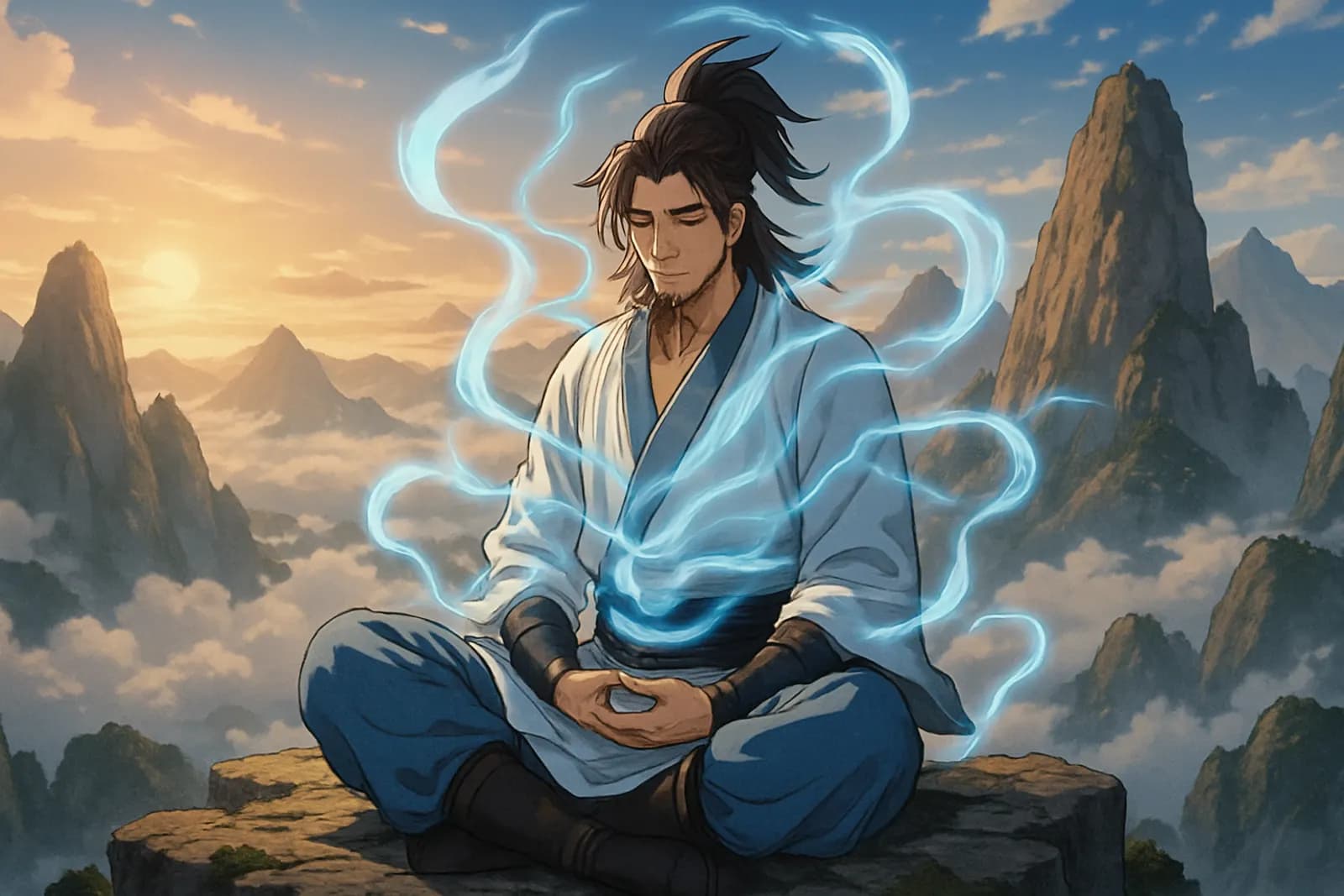
Historical and fantasy manhua lean heavily on Chinese costume and architecture: layered robes, hair ornaments, swords, pavilions, mountains wrapped in mist. Power is visualized with auras, sigils, and light trails.
4. Chinese mythology and philosophy as worldbuilding
Taoist ideas of qi (inner energy), immortality, sects, and heavenly tribulations show up constantly — not as decoration, but as the actual rules of the world.
The Genres Manhua Is Known For
Cultivation (xiuxian / xianxia)
The signature genre. A protagonist — often weak, mocked, or betrayed — discovers a path to grow stronger by refining their qi. The story moves through named realms of power, sect rivalries, hidden techniques, and ancient artifacts. If you've read isekai, cultivation will feel familiar: both are about steady progression and leveling up, and many cultivation stories also use reincarnation or "returning to the past" hooks.
Wuxia
Martial heroes, codes of honor, sword fights, and wandering swordsmen. Wuxia is more grounded than cultivation — closer to historical adventure than to godlike power.
Historical and palace drama
Stories set in imperial courts: political intrigue, rival consorts, schemes, and romance. These overlap heavily with the readership of josei and shojo manga.
Modern romance and "CEO" stories
Contemporary office romances and rich-heir love stories are popular in digital manhua, much as they are in webtoons.
Urban fantasy and "system" stories
A modern-day hero gains a "system" — a game-like interface that hands out quests and rewards. It's the same idea as many isekai and Korean leveling stories, transplanted to a Chinese city.
Manhua vs Manga vs Manhwa at a Glance
| | Manga | Manhwa | Manhua | |---|---|---|---| | Country | Japan | South Korea | China, Hong Kong, Taiwan | | Reading direction | Right to left | Left to right | Left to right | | Typical color | Black and white | Full color | Full color | | Common digital format | Pages | Vertical scroll | Vertical scroll or long pages | | Signature genres | Shonen action, every demographic | Romance fantasy, leveling | Cultivation, wuxia |
For the full side-by-side breakdown, see Manga vs Manhwa vs Manhua.
Manhua and Donghua
Just as manga is adapted into anime, manhua and Chinese web novels are adapted into donghua (动画, Chinese animation). Many cultivation titles have donghua versions, often animated in 3D. When someone recommends "the donghua of a manhua," they mean the animated adaptation of the comic.
Manhua and Web Novels
A large share of popular manhua adapt Chinese web novels — long serialized prose stories published chapter by chapter online. That explains why so many manhua run for hundreds of chapters and follow the steady escalation typical of serialized fiction. The relationship mirrors how many Japanese isekai manga adapt light novels.
How to Start Reading Manhua
- Pick a genre you already like. If you enjoy power fantasy, start with cultivation. If you prefer drama, try a palace intrigue story.
- Expect long runs. Many series are hundreds of chapters. Reading the first arc is usually enough to decide whether it's for you.
- Read through official sources. Many manhua are licensed on global webcomic apps and publisher sites. Official reading supports the creators who make the work.
- Learn the vocabulary. Terms like qi, dantian (the body's energy center), sect, elder, and young master appear constantly, and knowing them makes early chapters much easier to follow.
Making Manhua-Style Art With AI
You can create manhua-inspired panels without drawing. A few prompt elements that capture the look:
full color, painterly rendering, soft glowflowing layered robes, long hair with hair ornamentsmisty mountain sect, curved pavilion roofsglowing qi aura, energy trails, floating paper talismansdramatic low-angle hero pose
Try the Manhwa Maker → — 1 free token to start and 1 more every 2 days, no card required.
For deeper color and composition advice, read the Webtoon / Manhwa Style Guide — most of it applies directly to manhua.
---
More ways to bring this to life
FAQ
What does manhua mean? Manhua means "comics" in Chinese. In English it refers specifically to comics made in China, Hong Kong, or Taiwan, the same way manga refers to Japanese comics and manhwa to Korean comics.
Is manhua the same as manga? No. They share the same written characters (漫画), but manhua comes from Chinese-speaking regions, is usually in full color today, and reads left to right. Manga is Japanese, usually black and white, and reads right to left.
What is the difference between manhua and manhwa? Manhua is Chinese, manhwa is Korean. Both are usually full color and read left to right online, but manhua is especially associated with cultivation and wuxia, while manhwa is known for romance fantasy and leveling stories.
What is a cultivation manhua? A cultivation (xiuxian or xianxia) manhua follows a character who grows stronger by refining inner energy (qi), advancing through named realms of power. It draws on Taoist ideas of immortality and usually features sects, rivals, and secret techniques.
How do you pronounce manhua? Roughly man-hwah. In Mandarin it is mànhuà, with two falling tones.
What is donghua? Donghua is Chinese animation. Many manhua and Chinese web novels are adapted into donghua, much like manga is adapted into anime.
---
Keep Reading
- What Is Manhwa? — Korean comics explained
- Manga vs Manhwa vs Manhua — The full comparison
- What Is Isekai? — The progression-fantasy cousin of cultivation
- What Is a Webtoon? — The vertical-scroll format
- Types of Manga Genres Explained — Every demographic and genre in one place
Ready to create your own manga?
Start free — no credit card required. 1 free AI generation on signup, +1 every 2 days.
Start CreatingOn the go? Get the Gootaku iPhone app.
Related guides
What Is Mecha? The Giant Robot Genre Explained
Mecha is the manga/anime genre built around piloted giant robots. Learn its meaning, subtypes, trope…
What Is a Screentone? Manga Shading Explained
Screentones are the dotted shading patterns that give B&W manga its look. Here's what they are, how …
What Is Seinen? Meaning, Themes & Examples
Seinen (青年) means 'young man' — manga written for adult readers. Here's what seinen is, how it diffe…
What Is Shojo? Bigger Than "Romance for Girls
Shojo gets reduced to romance for teen girls, but the genre goes deeper. Here's what actually define…
Comic Maker Styles Explained — Superhero, Noir, Retro & More
A breakdown of every style option in Gootaku's Comic Maker — what each one actually looks like and w…
Cyberpunk Manga Style Guide — AI Art Prompts
Master the cyberpunk manga style for AI — neon lighting, futuristic cities, cybernetic detail, rain-…