What Is Manhwa? Manhwa vs Manga vs Manhua, Explained
Manhwa (만화) is the Korean word for comics: full-color, often vertical-scroll stories. What manhwa means and how it differs from manga and manhua.
Written by Bugra, founder of Gootaku
Quick answer
Manhwa means Korean comics, created in South Korea, the equivalent of Japan's manga. Manhwa, manhua and manga all mean comics in their languages but are not interchangeable, because manhwa developed its own visual language, pacing and vertical-scroll publishing format.
Contents
Manhwa (만화, pronounced mahn-hwa) means Korean comics: comics created in South Korea, the Korean equivalent of Japan's manga or America's comic books. The word is often misspelled "manwha"; the correct romanization is manhwa.
If you've read Tower of God, Solo Leveling, True Beauty, or The Beginning After the End, you've read manhwa. These aren't manga — they're Korean originals that developed their own visual language, storytelling conventions, and publishing formats.
---
Key facts
- Korean: 만화 (manhwa), written with the same Chinese characters as Japanese manga and Chinese manhua (漫畫).
- Reading direction: left to right in print; top to bottom in vertical-scroll digital form.
- Format shift: Naver Webtoon launched in 2004 and helped turn most new manhwa into full-color, vertical-scroll webtoons.
- Global breakout: the Solo Leveling anime (from January 2024) and the second season of the Tower of God anime (2024) brought manhwa to mainstream anime audiences.
- Common misspelling: "manwha" is a frequent search typo for manhwa.
Manhwa vs Manga — Key Differences
People often use "manga" as a catch-all for all Asian comics. That's inaccurate. Manhwa and manga are distinct:
| Feature | Manhwa | Manga | |---------|--------|-------| | Origin | South Korea | Japan | | Reading direction | Left to right | Right to left | | Format | Vertical scroll (webtoon) | Horizontal pages (tankobon) | | Color | Usually full color | Usually black and white | | Publication | Primarily online (Webtoon, Naver) | Print first, then digital | | Chapter frequency | Weekly (often) | Weekly or monthly | | Panel style | Tall, cinematic, scrollable | Traditional page layout | | Character style | Realistic proportions, detailed backgrounds | More stylized, genre-dependent |
The most important difference in 2026: manhwa is digital-native. While manga originated in print and moved online, manhwa was born on the internet. The vertical-scroll format (called webtoon) is the default, not an adaptation.
---
The Three East Asian Comic Traditions
It helps to know all three:
Manga (漫画) — Japanese comics. Right to left. Black and white. Print origins. The most globally influential comic tradition of the 20th century.
Manhwa (만화) — Korean comics. Left to right. Full color. Digital-native. Explosive global growth since 2015.
Manhua (漫画) — Chinese comics. Left to right. Varied formats. Growing rapidly with Chinese digital platforms (Bilibili, Kuaikan). More in What Is Manhua?.
All three words literally mean "comics" in their respective languages — they just happen to share similar etymology through shared characters. For a side-by-side table, see Manga vs Manhwa vs Manhua.
---
What Makes Manhwa Visually Distinct?
If you put a manhwa panel next to a manga panel, you can usually tell them apart within seconds. Here's why:
1. Full Color
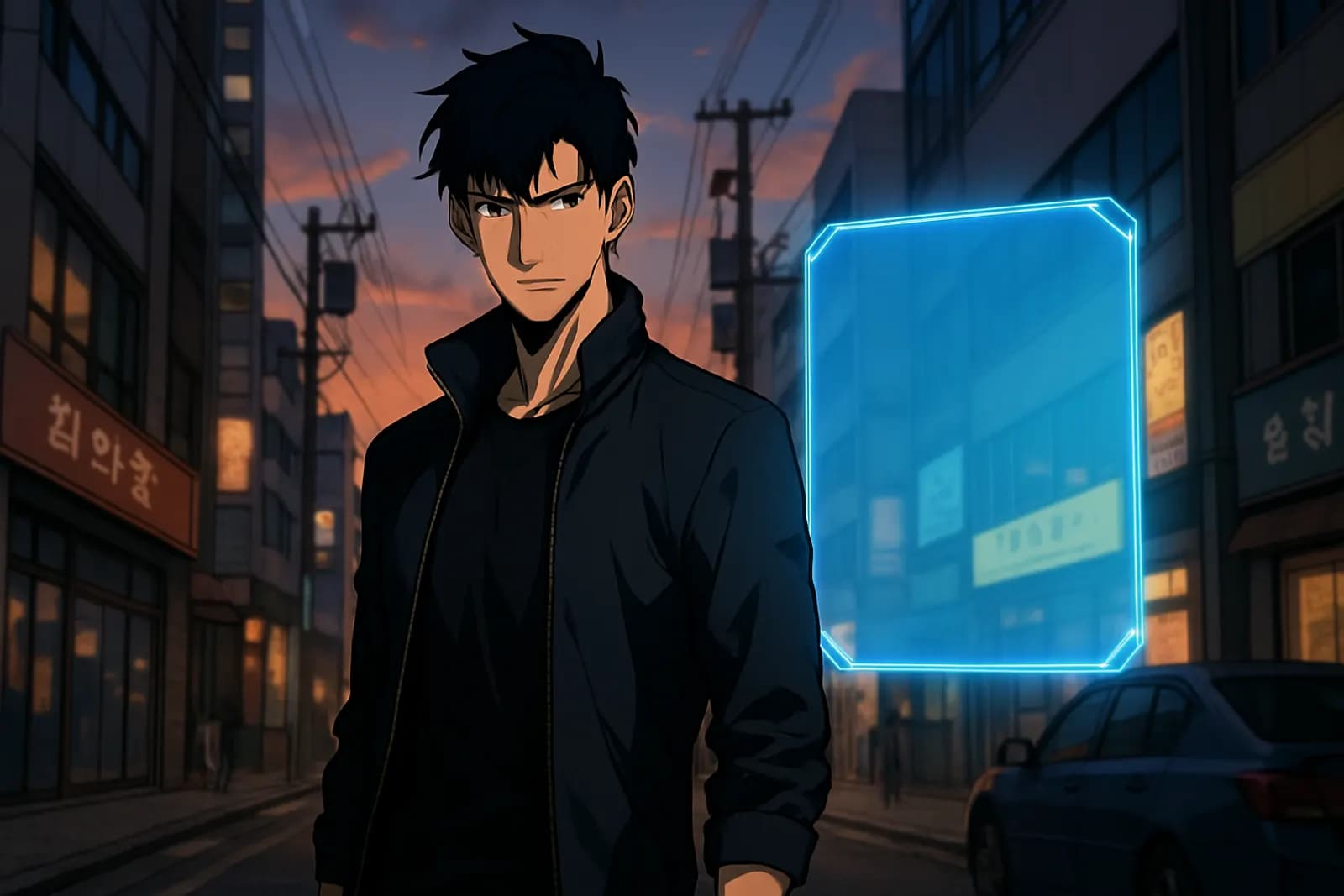
Manhwa is almost always in full color. This is both a stylistic choice and a platform requirement — Webtoon and Naver Webtoon were built for color from the start. The coloring in manhwa tends toward:- Warm, saturated skin tones
- Cinematic lighting (golden hour, backlighting, dramatic shadows)
- Detailed background art, often photorealistic
- Gradient effects that manga screentones can't replicate
2. Vertical-Scroll Format
Manhwa chapters aren't pages — they're long vertical strips designed to be read by scrolling on a phone. This changes everything about composition:- Panels are tall and narrow, not square
- Dramatic reveals are positioned so readers scroll into them
- Emotional moments get more vertical space
- Action sequences use cascading panels that flow downward
3. Character Aesthetics
Manhwa characters tend toward:- More realistic facial proportions than manga (smaller eyes, more defined noses)
- Detailed, fashion-forward clothing design
- Highly detailed hair with complex coloring and highlights
- Physically idealized but less caricatured than typical shonen
4. Pacing
Manhwa uses slower, more cinematic pacing than action-focused manga. Quiet moments — a character looking out a window, a hand reaching for something — get full panels. This suits the mobile reading experience, where readers are scrolling casually rather than sitting with a physical book.---
Major Manhwa Titles to Know
Action / Fantasy
- Solo Leveling — Hunter awakens as the world's strongest, hunts monsters in a dungeon-based society
- Tower of God — A boy climbs an infinite tower to find a girl who is "everything" to him
- The God of High School — Martial arts tournament with mythological powers
- Omniscient Reader's Viewpoint — Man enters a world based on a web novel he read
- Lookism — A bullied student wakes up with a second, perfect body; adapted as a Netflix anime in 2022
- True Beauty — Girl who's insecure about her appearance learns makeup as armor, falls for a boy who sees through it
- Cheese in the Trap — College student navigates a relationship with a dangerously perfect senior
- My ID is Gangnam Beauty — Young woman who had plastic surgery due to bullying enters college
- The Beginning After the End — A powerful king reincarnates in a fantasy world as a child and must grow up again
- The Remarried Empress — Political romance in a fantasy setting, female protagonist navigating royal court
- Beware of the Villainess — Modern woman transmigrates into a romance novel's villain character
Why Manhwa Exploded Globally
Three things happened simultaneously:
1. Webtoon made it free and accessible. LINE Webtoon (English platform) launched in 2014 and gave global readers free access to thousands of series. No importing, no shipping, no paywall for most content.
2. Mobile reading behavior matched the format. The vertical scroll format is native to how people read on phones. Manga pages require zooming and horizontal scrolling on mobile — manhwa doesn't.
3. Korean content's global moment. The success of K-pop, Korean drama, and Korean film (Parasite, Squid Game) created an audience already primed to engage with Korean creative output. Manhwa benefited directly.
The result: Solo Leveling animated adaptation (2024) was one of the most-watched anime of the year — despite being a Korean property adapted by a Japanese studio. The lines between "manhwa" and "manga" audience have nearly dissolved. If you want to try the style yourself, start with our overview of the AI manhwa generator.
---
Manhwa vs Webtoon — Are They the Same?
Almost, but not exactly.
Manhwa = Korean comics, any format (including traditional print) Webtoon = The vertical-scroll digital format, originally pioneered by Korean creators
Webtoon has become so associated with manhwa that people use the words interchangeably. But technically: all Korean webtoons are manhwa, but not all manhwa are webtoons (some are still published in traditional print format), and webtoons now exist from non-Korean creators too.
When people say "webtoon" in casual conversation, they usually mean Korean-style full-color vertical-scroll digital comics — which is effectively synonymous with modern manhwa.
---
How to Create Manhwa-Style Art With AI
The manhwa visual style is one of the most recognizable in AI-generated comics. Key elements:
Prompt components for manhwa style:
manhwa styleorwebtoon stylefull color, vibrantcinematic lighting/golden hour lightingdetailed backgroundrealistic facial proportionsKorean webtoon aesthetic
manga style(pulls toward Japanese aesthetics)black and white(breaks the color convention)screentone(manga technique, not manhwa)
- Select the Webtoon style preset — it's tuned for the manhwa aesthetic
- Use tall, narrow panel formats to match the scrolling format
- For romance manhwa, add:
soft lighting, fashion-forward clothing, detailed hair highlights - For action manhwa, add:
dynamic pose, particle effects, dramatic shadows, dungeon setting
---
Manhwa for Creators — What to Consider
If you want to create manhwa (not just read it):
Format: Commit to vertical scroll from the start. Don't make horizontal pages and convert — design for the scroll.
Color: Manhwa readers expect full color. If you're using AI generation, select full-color styles and avoid the black-and-white presets.
Publishing platforms: Webtoon Canvas (LINE Webtoon's creator platform), Tapas, and Naver Webtoon are the primary targets. All three are designed for vertical-scroll format.
Pacing: Give scenes more space than you think they need. A dramatic revelation deserves a full panel. A quiet moment builds tension when it's given room.
Character design: Lean toward more realistic proportions than manga. Manhwa protagonists are beautiful in a way that's more photogenic than stylized.
For a full publishing walkthrough: How to Publish on Webtoon Canvas
Start creating manhwa-style art → — 1 free AI token to start and 1 more every 2 days, no card required.
Full-color panels, tall scroll-ready framing, and a consistent cast across dozens of episodes are exactly what the Gootaku Comic Maker is tuned for — pick the Webtoon style preset and describe each beat instead of drawing it.
Try the Comic Maker → — 1 free token to start and 1 more every 2 days, no card required.
---
More ways to bring this to life
FAQ
Is manhwa the same as manga? No. Manhwa is Korean; manga is Japanese. They share some visual influences (both emerged from exposure to American comics and each other) but are distinct traditions with different formats, reading directions, and aesthetic conventions.
Is manhwa read left to right or right to left? Left to right — same as Western comics. This is the opposite of traditional Japanese manga (right to left). The modern webtoon format makes reading direction mostly irrelevant since it's vertical scroll.
What's the difference between manhwa, manga, and manhua? Manga = Japanese. Manhwa = Korean. Manhua = Chinese. All three words mean "comics" in their respective languages.
Why is manhwa usually in color? Manhwa developed in a digital-first environment where color was possible and expected from the beginning. Manga's black-and-white tradition comes from its print origins — color printing was expensive, and the aesthetics developed around that constraint. Manhwa had no such constraint.
Is Solo Leveling manga or manhwa? Manhwa. Solo Leveling is a Korean original (based on a Korean web novel, drawn by Korean artist Dubu, published on Kakao Page). The 2024 animated adaptation was produced by Japanese studio A-1 Pictures, which sometimes causes confusion.
---
Keep Reading
- Webtoon / Manhwa Style Guide — Visual codes, prompt templates, and aesthetic breakdown
- What Is a Webtoon? — The digital publishing format explained
- Manga vs Comic vs Webtoon — Full format comparison
- How to Publish on Webtoon Canvas — The primary platform for manhwa creators
- Best AI Tools for Webtoon Creators 2026 — Tool comparison for the format
Ready to create your own manga?
Start free — no credit card required. 1 free AI generation on signup, +1 every 2 days.
Start CreatingOn the go? Get the Gootaku iPhone app.
Related guides
Webtoon Style Guide — It's Not Just "Manga You Scroll
Full color, vertical panels, and cinematic pacing change how you actually draw. Here's the exact web…
What Is a Webtoon? Definition, Origin & vs Manga
A webtoon is a Korean-origin digital comic built for vertical scrolling on mobile. Here's what webto…
AI Manhwa Generator — Make Webtoon-Style Manhwa Online
Make Korean-style manhwa with an AI manhwa generator — full color, vertical scroll, consistent chara…
Color Theory for Webtoons — A Practical Guide
Color is half of a webtoon's emotional impact. Learn palette construction, mood mapping, and lightin…
AI Comics for Patreon — A Weekly Release Workflow
A week-by-week workflow for running a Patreon comic with AI generation — structuring tiers, keeping …
Doujinshi Meaning: Self-Published Manga, Explained
Doujinshi means self-published works, usually fan-made or original manga sold at events like Comiket…