What Is Yuri? Meaning, and How It's Different From Shojo-ai
Yuri (百合, “lily”) is the genre about romance between women in manga and anime. What yuri means, how it differs from shojo-ai, and key series.
Written by Bugra, founder of Gootaku
Quick answer
Yuri, meaning lily, is manga and anime centered on romantic and emotional relationships between women, from chaste first love to explicitly adult romance. It is a content genre across every demographic, whereas shojo-ai is a Western term for its gentle, non-explicit end.
Contents
Quick Answer
Yuri (百合, pronounced yoo-ree, literally "lily") means manga and anime centered on romantic and emotional relationships between women. It ranges from chaste, tender stories of first love to explicitly adult romance, and it spans every demographic — there are yuri titles published for teen girls, adult women, and men alike. Defining and influential series include Bloom Into You, Citrus, Whispered Words, and Maria Watches Over Us.
Unlike shonen or josei, yuri is a content genre, not a demographic label — it describes what a story is about (love between women), not which magazine's audience it was sold to.
Key facts
- Japanese: 百合, "lily"; also called GL (Girls' Love), especially in Korean, Chinese and Thai publishing.
- Type: a content genre, not a demographic. Yuri is published in shojo, josei, seinen and dedicated yuri magazines.
- Roots: early 20th-century "Class S" fiction about intense schoolgirl bonds, above all Nobuko Yoshiya's Hana Monogatari (1916–1924).
- Dedicated magazine: Comic Yuri Hime, launched in 2005, became the genre's main home in Japan.
- Modern landmarks: Bloom Into You (manga 2015–2019), Whisper Me a Love Song (anime 2024). The soft, non-explicit end is what Western fans call shoujo-ai.
Yuri vs Related Terms
| Term | What it means | Used where | Explicit? | |------|---------------|-----------|-----------| | Yuri | Romance or deep emotional bonds between women | Japan and worldwide | Either | | GL (Girls' Love) | Same as yuri, parallel to BL | Korea, China, Thailand, publishers | Either | | Shoujo-ai | Soft, non-explicit yuri | Western fandom | No | | Class S | Pre-war schoolgirl romance fiction | Literary history | No | | BL / Yaoi | Romance between men | Japan and worldwide | Either |
What "Yuri" Literally Means
The word 百合 simply means "lily." The lily has long been associated in Japan with women and purity, and the flower became shorthand for romantic relationships between women in the 20th century. Over time yuri settled in as the umbrella term for the genre.
You'll also encounter the term "Girls' Love" (GL), which is increasingly used — especially internationally and in Korean/Chinese works — as a parallel to "Boys' Love" (BL). For most purposes, yuri and GL point at the same thing.
Yuri vs Shojo-ai — Is There a Difference?
You'll see "shojo-ai" (少女愛) used, mostly by Western fans, to mean "softer, non-explicit yuri." It's worth knowing two things:
- In Japan, "shojo-ai" is not a standard genre term — and it can carry uncomfortable connotations. The Japanese industry just uses yuri across the whole spectrum, from innocent to explicit.
- In Western fan usage, "shojo-ai" historically meant the emotional/romantic end and "yuri" the more explicit end — but this split has largely faded, and yuri is now the accepted umbrella term for everything.
Yuri vs Yaoi / BL
The mirror genre is yaoi, or Boys' Love (BL) — romance between men. The two are often discussed together as the two halves of same-gender romance manga, but they grew from different readerships and traditions, and their tropes and visual conventions differ. Yuri's roots run through the early-20th-century "Class S" tradition of intense schoolgirl friendships; BL grew out of the 1970s shojo manga scene. For a full introduction, read What Is BL (Boys' Love) Manga?.
Common Themes in Yuri
While yuri spans many tones, certain themes recur:
- First love and self-discovery — Many yuri stories follow a character realizing her feelings for another girl, often in a school setting. The emotional honesty of that realization is central.
- The school and the senpai/kohai bond — Schools, clubs, and the senior/junior relationship are classic yuri settings, descending from the "Class S" tradition.
- Tenderness and emotional intimacy — Even in adult yuri, the genre tends to prize emotional closeness, gentleness, and the slow build of trust.
- Identity and acceptance — Contemporary yuri increasingly engages directly with being a lesbian or queer woman, social pressure, and the path to self-acceptance.
- Adult relationships — Josei-adjacent yuri explores grown women, careers, cohabitation, and committed partnership beyond the schoolgirl frame.
The Visual Language of Yuri
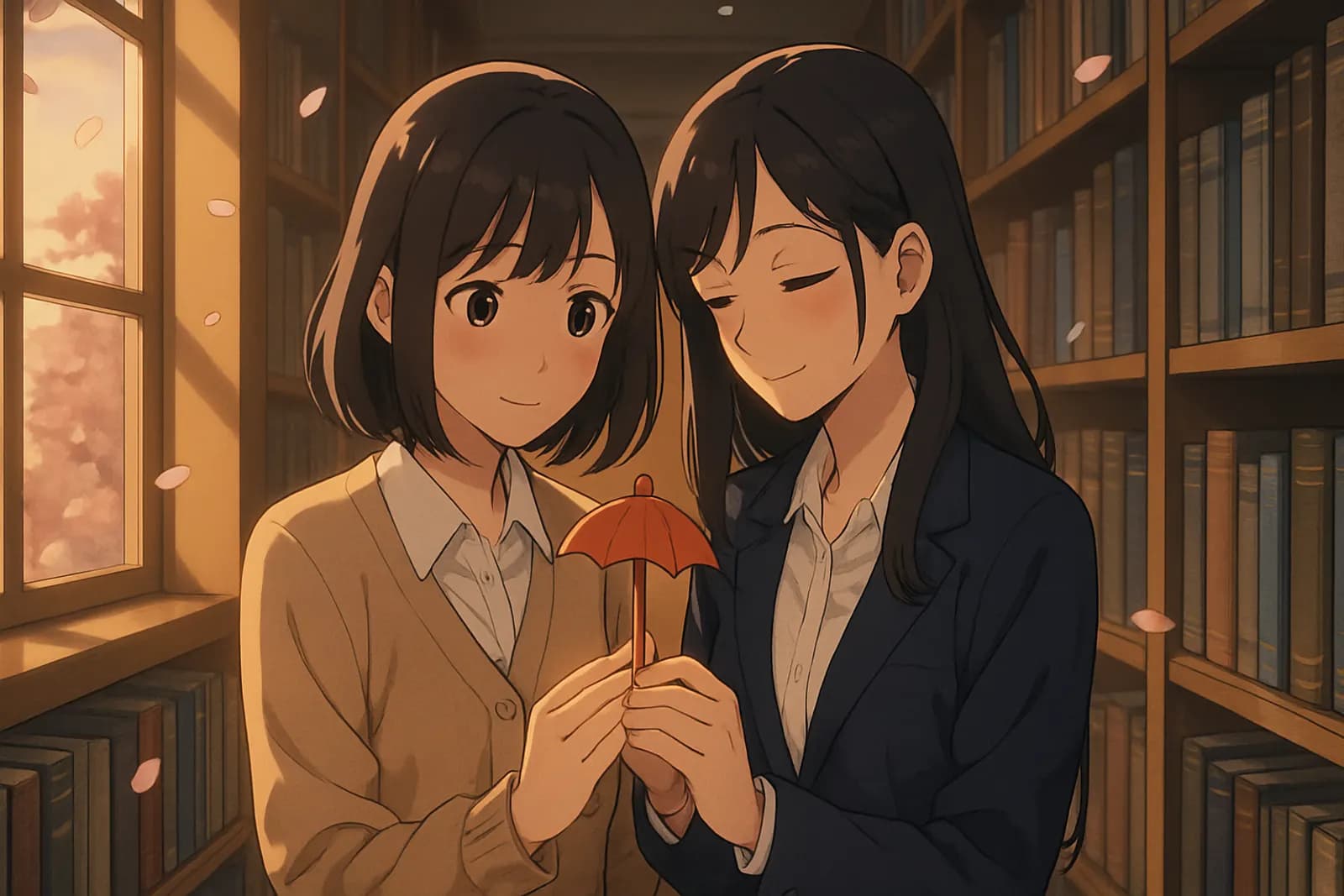
Yuri has a recognizable aesthetic vocabulary, much of which an artist (or an AI prompt) can lean on:
- Lily and floral motifs — Lilies especially, used as visual shorthand for the genre and its tenderness.
- Soft, warm lighting and gentle screentones — Intimacy rendered in soft glow rather than hard contrast.
- Close, charged framing — Hands almost touching, foreheads close, the small physical distances that carry the emotion.
- Expressive eyes and blush — As in romance manga broadly, the involuntary tell that says this matters.
Defining Series to Know
- Bloom Into You — A landmark modern yuri about a girl who can't feel romantic love and the senpai who falls for her; widely praised for emotional nuance.
- Maria Watches Over Us — A hugely influential "Class S" descendant set in a Catholic girls' school, codifying the senpai/kohai dynamic for a generation.
- Citrus — A popular, more dramatic step-sisters romance that brought yuri to a large international audience.
- Whispered Words — A grounded, bittersweet comedy-drama about unrequited feelings and friendship.
- Adachi and Shimamura — Hitoma Iruma's introspective light novel series about two high school girls drifting into love; anime in 2020.
Recent yuri anime (2023–2024)
- Yuri Is My Job! (2023) — a café where staff play at a Class S-style school, and the act becomes real feelings.
- I'm in Love with the Villainess (2023) — a fantasy romcom in which a reincarnated fan openly adores the noble "villainess."
- Whisper Me a Love Song (2024) — a music-driven high school romance that starts with a misunderstood confession.
Is Yuri the Same as "Lesbian Manga"?
Roughly, yes — yuri is manga about love and intimacy between women — but with nuance. Historically much yuri was written for a broad audience and didn't always center an explicitly lesbian identity; some older works used the schoolgirl romance as a "phase" framing. Contemporary yuri increasingly tells genuine, affirming queer stories. So yuri contains lesbian manga and overlaps heavily with it, but the genre's history is broader than that single description.
Make Your Own Yuri Manga
If yuri is the story you want to tell, you don't need to draw it. In Gootaku you can describe your characters and scenes and let the AI render them in the soft, tender style the genre lives on — then add dialogue and share the result. You bring the relationship and the beats; the AI handles the art.
Start creating → — 1 free token to start and 1 more every 2 days.
---
More ways to bring this to life
Frequently Asked Questions
What does yuri mean in manga?
Yuri (百合, literally "lily") is a manga genre centered on romantic and/or emotional relationships between female characters. It spans everything from soft, unspoken schoolgirl crushes to explicit adult romance, unified by female-female intimacy as the core focus.
Is yuri the same as shojo-ai?
They overlap but aren't identical. "Shojo-ai" is an older, mostly Western fan term for softer, non-explicit girl-on-girl romance, while "yuri" is the term actually used in Japan and covers the full range from subtle to explicit. Most people today just say "yuri" for all of it.
Is all yuri manga explicit?
No. Much yuri is entirely non-explicit — focused on emotional tension, longing, and quiet romantic development rather than physical content. Explicit yuri exists as its own clearly labeled sub-category, not the default.
Can I create yuri manga with AI without drawing?
Yes — with a tool like Gootaku, you describe your characters and the scene, and the AI generates art in a style suited to the genre, so you can focus on writing the relationship and story beats.
Keep Reading
- Try the AI Manga Maker → — generate manga panels from text, free to start
- What Is Shojo Manga? — The teen-girl tradition yuri often grows from
- What Is Josei Manga? — Adult women's manga, where mature yuri often lives
- Romance Manga Style Guide — The visual grammar of intimacy and tension
- How to Plot a Romance Manga — Beats, arcs, and emotional payoff
- What Is Gootaku? — How the platform works, start to finish
Ready to create your own manga?
Start free — no credit card required. 1 free AI generation on signup, +1 every 2 days.
Start CreatingOn the go? Get the Gootaku iPhone app.
Related guides
Shojo Manga Style — Complete Guide for AI Creators
Master the romantic, sparkly look of shojo manga — big eyes, flower motifs, soft screentones, emotio…
Shoujo-ai Meaning: Shoujo-ai vs Yuri vs GL Explained
Shoujo-ai means romance between girls or women, usually the soft, non-explicit end of yuri. Where th…
Harem Manga Meaning: Harem and Reverse Harem Explained
Harem manga means one protagonist with several love interests. What harem and reverse harem mean, th…
Iyashikei Meaning: The Healing Genre of Manga and Anime
Iyashikei means healing type: calm, gentle manga and anime made to soothe the reader. What makes a s…
Sports Manga Style Guide — AI Prompts for Action
Create authentic sports manga with AI — athletic anatomy, action choreography, stadium scenes, and p…
Supernatural Manga Style — Visual Guide for AI Creators
Master the eerie look of supernatural manga — yokai, curses, glowing eyes, ink-black shadows. Copy-p…