What Is Shojo? Bigger Than "Romance for Girls
Shojo (少女) means “young girl”: manga for teen girls, focused on emotion and relationships, not only romance. What shojo means and how it differs.
Written by Bugra, founder of Gootaku
Quick answer
Shojo means manga aimed primarily at young teen girls, built around emotion, relationships and inner feeling rather than action and combat. If shonen asks how to get stronger, shojo asks how to understand your own heart, and like other demographics it is a publishing label.
Contents
Shojo (少女, "young girl") means manga aimed primarily at young teen girls, built around emotion, relationships, and inner feeling rather than action and combat. If shonen asks "how do I get stronger?", shojo asks "how do I understand my own heart and the people around me?"
It's one of the four major publishing demographics in Japanese manga — alongside shonen (teen boys), seinen (adult men), and josei (adult women). And like all of those labels, it describes who a magazine is marketed to, not who actually reads it. Plenty of adults, plenty of boys, and a huge global audience read shojo at scale. (A fifth demographic, kodomo, covers manga for young children.)
Key facts
- Japanese: 少女, shō (few, young) + jo (woman): "girl." Also romanized shoujo or shōjo.
- Type: a demographic (publishing label), not a genre. Shojo includes romance, fantasy, comedy, horror and sports.
- Major magazines: Ribon, Nakayoshi, Margaret, Hana to Yume, Bessatsu Margaret, Sho-Comi and Dessert.
- Defining era: the 1970s, when the Year 24 Group of women artists (Moto Hagio, Keiko Takemiya and others) reinvented the form.
- Recent adaptations: A Sign of Affection (anime 2024), Kimi ni Todoke season 3 (2024), Honey Lemon Soda (anime 2025).
What "Shojo" Literally Means
Shojo is written 少女, and the kanji break down cleanly:
- 少 (sho) — "few" or "young"
- 女 (jo) — "woman" or "girl"
In Japan, shojo is a publishing demographic label. A magazine like Nakayoshi, Ribon, or Hana to Yume is shojo because of its target reader — typically girls roughly 10 to 18 — not because the stories follow any single rulebook. Everything else we call "shojo conventions" grew out of decades of artists making manga for that audience.
Demographic vs. Content
This is the single most important thing to understand about shojo, and it's where most people get confused.
Shojo is not a genre about a topic. It's a category defined by audience. Within shojo you'll find romance, fantasy, sports, horror, comedy, sci-fi, and historical drama. A shojo manga and a shonen manga can tell wildly similar stories — the difference is the lens, the emotional priorities, and the magazine it ran in.
That said, decades of work for young female readers produced a reliable set of storytelling and visual habits. So in everyday conversation, people use "shojo" to mean both the demographic and the emotional, relationship-driven style that grew out of it. Both uses are valid; just know which one you mean.
How Shojo Differs From Shonen
Shojo and shonen are the two most-compared manga demographics, and the contrast is genuinely useful for understanding both.
The biggest difference isn't subject matter — it's focus and priority. Shonen tends to externalize conflict (fights, tournaments, escalating threats); shojo tends to internalize it (feelings, misunderstandings, growth, the gap between what people say and feel). A shonen battle is settled with a punch. A shojo "battle" is settled with a confession, a choice, or a moment of understanding.
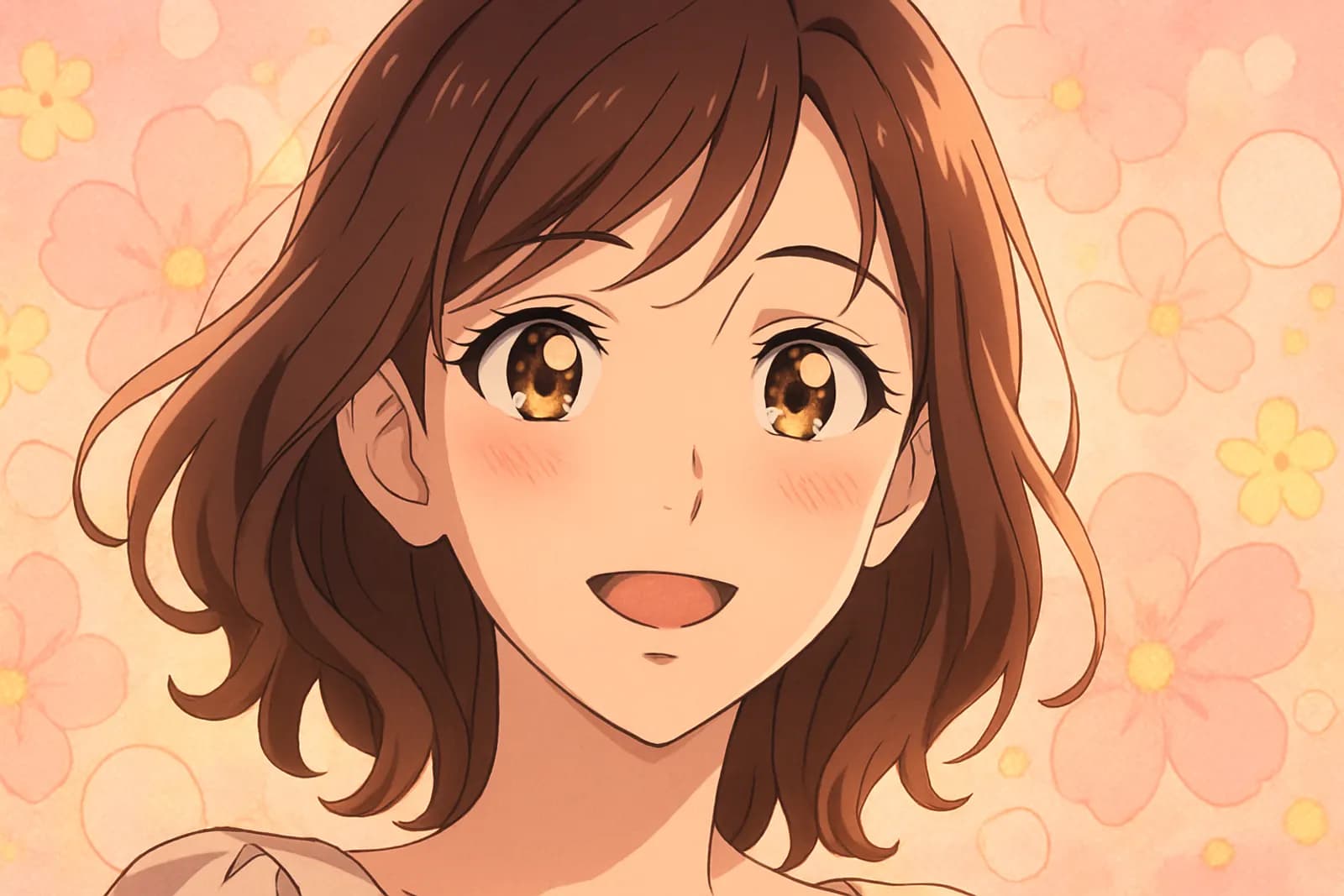
The art reflects this. Shojo art evolved to render emotion legibly: big, sparkly eyes that carry a character's feelings, delicate linework, flowers and decorative screentones that float across panels as mood rather than literal objects, and soft, layered tones instead of hard high-contrast inking. Panels are often more fluid and overlapping, breaking the grid to mirror an emotional rush.
| | Shojo (少女) | Shonen (少年) | |---|---|---| | Target reader | Young teen girls (~10-18) | Young teen boys (~12-18) | | Core question | How do I understand my heart and others? | How do I grow stronger and win? | | Conflict | Internal — emotion, relationships | External — fights, rivals, threats | | Pacing | Emotional beats, quiet moments | Action arcs, escalating stakes | | Typical art | Big sparkly eyes, flowers, soft screentones, delicate lines | Bold designs, motion lines, hard shadows, dynamic action | | Panels | Fluid, overlapping, decorative | Strong grid, impact-driven | | Common SFX | doki doki (heartbeat), ambient mood | DON!, ZUDOOON!, impact bursts |
Neither is "better." They're tuned for different emotional experiences — and many of the best modern series deliberately borrow from both.
Common Shojo Themes
While shojo spans every genre, certain themes recur because they resonate with the coming-of-age experience at the heart of the demographic:
- Romance — the most associated theme, from slow-burn first love to complicated love triangles. Often the emotional spine even when the plot is about something else.
- Friendship — loyalty, rivalry, and the intense bonds of teenage friendship, frequently weighted as heavily as romance.
- Self-discovery — figuring out who you are, what you want, and where you belong. The protagonist's inner growth is usually the real arc.
- Drama and emotional conflict — family tension, social pressure, grief, insecurity, and the everyday stakes of adolescence treated with full seriousness.
- Found connection — outsiders finding their people; characters learning to trust and open up.
Shojo Subgenres at a Glance
Because shojo is a demographic, it contains many genres. A few of the most recognizable:
- Romance — the flagship. Includes school romance, slow-burn, and reverse-harem setups where one heroine is surrounded by several love interests.
- Magical girl (mahou shojo) — ordinary girls gain powers and transform to protect others. Blends action with friendship and emotional growth, and is arguably shojo's most globally famous export.
- Slice-of-life — low-stakes, character-driven stories about everyday school life, friendship, and small emotional turning points.
- Josei-adjacent — as readers grow up, shojo shades into josei (manga for adult women), which trades teen first-love for more mature relationships, careers, and realism. The line between late-teen shojo and early josei is genuinely blurry.
The Series That Define Shojo
A handful of titles are reliably name-checked when people describe what shojo is:
- Sailor Moon — Naoko Takeuchi's magical-girl landmark that introduced shojo to a global audience and defined the genre's transformation-and-friendship template.
- Fruits Basket — Natsuki Takaya's beloved story of a kind orphan and a cursed family, often held up as the emotional heart of modern shojo.
- Ouran High School Host Club — Bisco Hatori's witty reverse-harem comedy that gleefully plays with shojo tropes while delivering them.
- Kimi ni Todoke — Karuho Shiina's tender slow-burn about a misunderstood girl learning to connect, a touchstone for pure shojo romance.
- Nana — Ai Yazawa's story of two young women navigating love, ambition, and friendship; a frequent bridge between shojo sensibility and adult josei themes.
Shojo on screen recently (2024–2025)
- A Sign of Affection (Yubisaki to Renren) — suu Morishita's romance between a deaf college student and a multilingual traveler; anime in 2024.
- Kimi ni Todoke — returned with a third season in 2024, more than a decade after the second.
- Honey Lemon Soda — Mayu Murata's high school romance, serialized in Ribon, adapted to anime in 2025.
These aren't a ranking — they're reference points. Each one captures a different facet of what shojo does: emotion, transformation, comedy, romance, and the messy reality of growing up.
The Visual Style of Shojo
If you want to make shojo rather than just read it, the look matters as much as the story. Shojo art is instantly recognizable: expressive oversized eyes with elaborate highlights, flowing hair, slender figures, floral and bubble screentone overlays, sparkles for emotional emphasis, and soft, romantic lighting. Backgrounds often dissolve into pattern or abstraction during charged moments, because the panel is showing a feeling, not a place.
We break down every one of these techniques — eyes, screentones, panel flow, color palettes, and SFX — in our dedicated Shojo Manga Style Guide.
Creating Shojo Manga With AI
You don't need to be able to draw sparkly eyes by hand to make a shojo story. That's the whole idea behind Gootaku: you write, AI draws.
You describe your scene — the soft pink classroom, the nervous confession under the cherry blossoms, the close-up on wide, glistening eyes — and the AI renders it in a shojo-leaning style. You stay in control of the story, the dialogue, the pacing, and the emotional beats, while the art generation handles the rendering. Then you arrange the results into comic panels, a full manga page, or an animated GIF.
It's free to start: every account gets 1 free token to start and 1 more every 2 days, no card required, and there's no subscription. One token makes one image, so you can sketch out a full romantic scene and see your characters come to life before you ever spend anything.
Start free on Gootaku → — 1 free token to start and 1 more every 2 days.
More ways to bring this to life
Frequently Asked Questions
What does shojo mean?
Shojo (少女) literally means "young girl." In manga, it refers to titles published for an audience of young teen girls, characterized by a focus on emotion, relationships, romance, and personal growth rather than action and combat.
Is shojo a genre or a demographic?
Technically it's a demographic — it describes the target reader (young teen girls), not the subject matter. Within shojo you'll find romance, fantasy, magical girl, slice-of-life, and more. In casual use, people also use "shojo" to describe the emotional, relationship-driven storytelling style that grew out of that demographic.
What's the difference between shojo and shonen?
Shojo targets young girls and emphasizes internal conflict, emotion, and relationships, with art built around expressive eyes, flowers, and soft tones. Shonen targets young boys and emphasizes action, friendship, and growing stronger, with bold designs and dynamic fight scenes. The split is about audience and emotional priority, not story quality.
Is shojo only romance?
No. Romance is the most associated theme, but shojo includes magical girl stories, slice-of-life, comedy, fantasy, drama, and more. Romance is often the emotional core even when the plot centers on something else.
What's the difference between shojo and josei?
Both are made for female readers, but shojo targets teen girls while josei targets adult women. Josei tends to feature more mature relationships, careers, and realism, where shojo leans toward first love and coming-of-age. The boundary between late-teen shojo and early josei is often blurry — see our Josei Manga Style Guide for more.
Keep Reading
- Try the AI Manga Maker → — generate manga panels from text, free to start
- Shojo Manga Style Guide
- What Is Shonen?
- Josei Manga Style Guide
- How to Plot a Romance Manga
- What Is Gootaku?
Ready to create your own manga?
Start free — no credit card required. 1 free AI generation on signup, +1 every 2 days.
Start CreatingOn the go? Get the Gootaku iPhone app.
Related guides
Shojo Manga Style — Complete Guide for AI Creators
Master the romantic, sparkly look of shojo manga — big eyes, flower motifs, soft screentones, emotio…
What Is Shonen? Definition, Examples & Origins
Shonen (少年) means “young boy”: manga for teen boys, built on action, rivalry and growth. The shonen …
What Is Slice of Life? The Everyday-Moments Genre Explained
Slice of life is the manga/anime genre built around ordinary, everyday moments instead of dramatic p…
What Is Supernatural Manga? The Hidden-World Genre Explained
Supernatural manga puts spirits, curses, and psychic powers inside our own world. Learn its meaning,…
Mecha Manga Style Guide — AI Art Prompts for Giant Robots
Master the mecha manga aesthetic for AI — mechanical design, action composition, sci-fi backgrounds,…
Noir Comic Style — Complete Guide for AI Creators
Master the noir comic style — extreme high-contrast ink, deep shadows, hardboiled captions. Composit…