What Is Seinen? Meaning, Themes & Examples
Seinen (青年) means “young man”: manga for adult readers, darker and more complex than shonen. What seinen means, its themes and defining series.
Written by Bugra, founder of Gootaku
Quick answer
Seinen is Japanese manga and anime aimed at adult men, roughly ages 18 to 40, defined by mature themes such as psychological depth, realistic violence, politics and philosophy and a more grounded, detailed art style than shonen. Defining series include Berserk, Vagabond and Vinland Saga.
Contents
Quick Answer
Seinen (青年, pronounced say-nen, "youth" or "young man") means Japanese manga and anime aimed at adult men, roughly ages 18 to 40. It's defined by mature themes — psychological depth, realistic violence, politics, work life, and philosophy — and a more grounded, detailed art style than the teen-focused shonen genre. Defining series include Berserk, Vagabond, Vinland Saga, and Monster.
Like all manga demographics, seinen is a publishing label, not a strict creative rule. It tells you who the magazine was marketed to, not who actually reads it — adult women, teens, and readers worldwide all read seinen at scale.
Key facts
- Japanese: 青年, sei (blue, green; youthful) + nen (year, age). In everyday Japanese it means a young adult man.
- Type: a demographic (publishing label), not a genre. Seinen spans fantasy, crime, sports, romance and slice of life.
- Main magazines: Weekly Young Jump, Young Magazine, Big Comic Spirits, Morning, Afternoon and Young Animal, among others.
- Era: the label took shape in the late 1960s as readers who grew up on shonen wanted more mature manga; gekiga ("dramatic pictures") was a key influence.
- Recent hits: Delicious in Dungeon (anime 2024), Oshi no Ko (manga concluded 2024), The Summer Hikaru Died (anime 2025).
What "Seinen" Literally Means
The word is written with two kanji:
- 青 (sei / blue, but here meaning "young / green / fresh")
- 年 (nen / year)
In Japan, the line is drawn at the magazine. A title that runs in a seinen magazine — like Young Jump, Big Comic, Afternoon, or Ultra Jump — is seinen by definition, because of the audience that magazine was built for. You can usually tell at a glance: seinen magazines carry no furigana (the small pronunciation guides printed above kanji for younger readers), because their audience can already read fluently.
Demographic vs Content: An Important Distinction
It's worth being precise here, because seinen confuses people more than any other label.
Seinen is a demographic category, not a content category. It describes the intended reader, not a fixed list of allowed themes. That's why seinen is so broad: it includes brutal dark fantasy (Berserk), quiet slice-of-life comedy (Yotsuba&!), workplace drama, sci-fi, sports, romance, and horror. What unites them isn't subject matter — it's that the publisher aimed them at adults. For how demographics and genres fit together, see Types of Manga Genres Explained.
This is why "is this seinen?" can't always be answered from the story alone. Attack on Titan reads like seinen in tone and brutality, but it ran in a shonen magazine, so it's technically shonen. The label follows the magazine, not the vibe.
Seinen vs Shonen: The Core Differences
This is the comparison most people are searching for. Both target young male readers — but a decade of age changes almost everything about how the story is told.
| | Shonen | Seinen | |---|--------|--------| | Target audience | Boys, ~12–18 | Men, ~18–40 | | Core themes | Friendship, growth, heroism | Ambiguity, consequence, the human condition | | Violence | Stylized, rarely lasting | Realistic, with weight and aftermath | | Morality | Clear heroes and villains | Grey, flawed, often no "right" side | | Art realism | Bold, exaggerated, dynamic | Detailed, anatomical, often gritty | | Pacing | Faster, arc-and-cliffhanger driven | Slower, room for silence and reflection | | Endings | Hero wins, hope restored | Earned, sometimes bittersweet or open |
The simplest way to feel the difference: in shonen, the hero gets back up. In seinen, the story asks what getting back up costs — and whether it was worth it.
Common Seinen Themes
Because seinen assumes an adult reader, it can sit with subjects that shonen usually keeps in the background:
- Psychological depth — interior monologue, trauma, obsession, and unreliable narrators. Monster and Oyasumi Punpun live here.
- Realistic violence — not power-ups and recovery, but injury, death, and the lasting damage of war and crime. Berserk and Vinland Saga don't flinch.
- Politics and power — succession, ideology, revolution, and the machinery of states and institutions.
- Work life and ambition — careers, burnout, craftsmanship, and the grind of becoming great at something. Vagabond is, underneath the sword fights, about mastery.
- Philosophy and meaning — questions about free will, mortality, faith, and what a person owes the world. Vinland Saga's "I have no enemies" arc is openly philosophical.
- Moral ambiguity — protagonists who do terrible things for understandable reasons, and antagonists you sympathize with.
The Series That Define Seinen
These are factual cultural touchstones — the titles most often cited when people describe what seinen is:
- Berserk (1989–present) — Kentaro Miura. Dark medieval fantasy, extreme detail, the genre's most famous example of seinen's appetite for darkness.
- Vagabond (1998–present, on hiatus) — Takehiko Inoue. A fictionalized life of swordsman Miyamoto Musashi; arguably the most beautifully drawn manga ever made.
- Vinland Saga (from 2005) — Makoto Yukimura. Vikings, revenge, and a hard turn toward pacifism and redemption.
- Monster (1994–2001) — Naoki Urasawa. A psychological thriller about a doctor hunting the serial killer he once saved.
- Oyasumi Punpun (2007–2013) — Inio Asano. A coming-of-age story about depression, drawn with unsettling honesty.
- Kingdom (2006–present) — Yasuhisa Hara. A sprawling historical war epic about China's Warring States, built for patient adult readers.
Recent seinen worth knowing (2023–2025)
- Delicious in Dungeon (Dungeon Meshi) — Ryoko Kui. A dungeon crawl about cooking the monsters; the manga ended in 2023 and the anime arrived in 2024.
- Oshi no Ko — Aka Akasaka and Mengo Yokoyari. A dark look at the entertainment industry wrapped in a revenge plot; the manga concluded in 2024.
- The Summer Hikaru Died — Mokumokuren. Rural horror about a boy who knows his best friend has been replaced by something else; anime in 2025.
The Seinen Visual Style
You can often recognize seinen before reading a single word, because the art tends to be more realistic than shonen's.
- Realistic anatomy and proportions — bodies and faces drawn closer to life than to icon.
- Dense detail and rendering — backgrounds, textures, armor, and environments rendered with care rather than simplified.
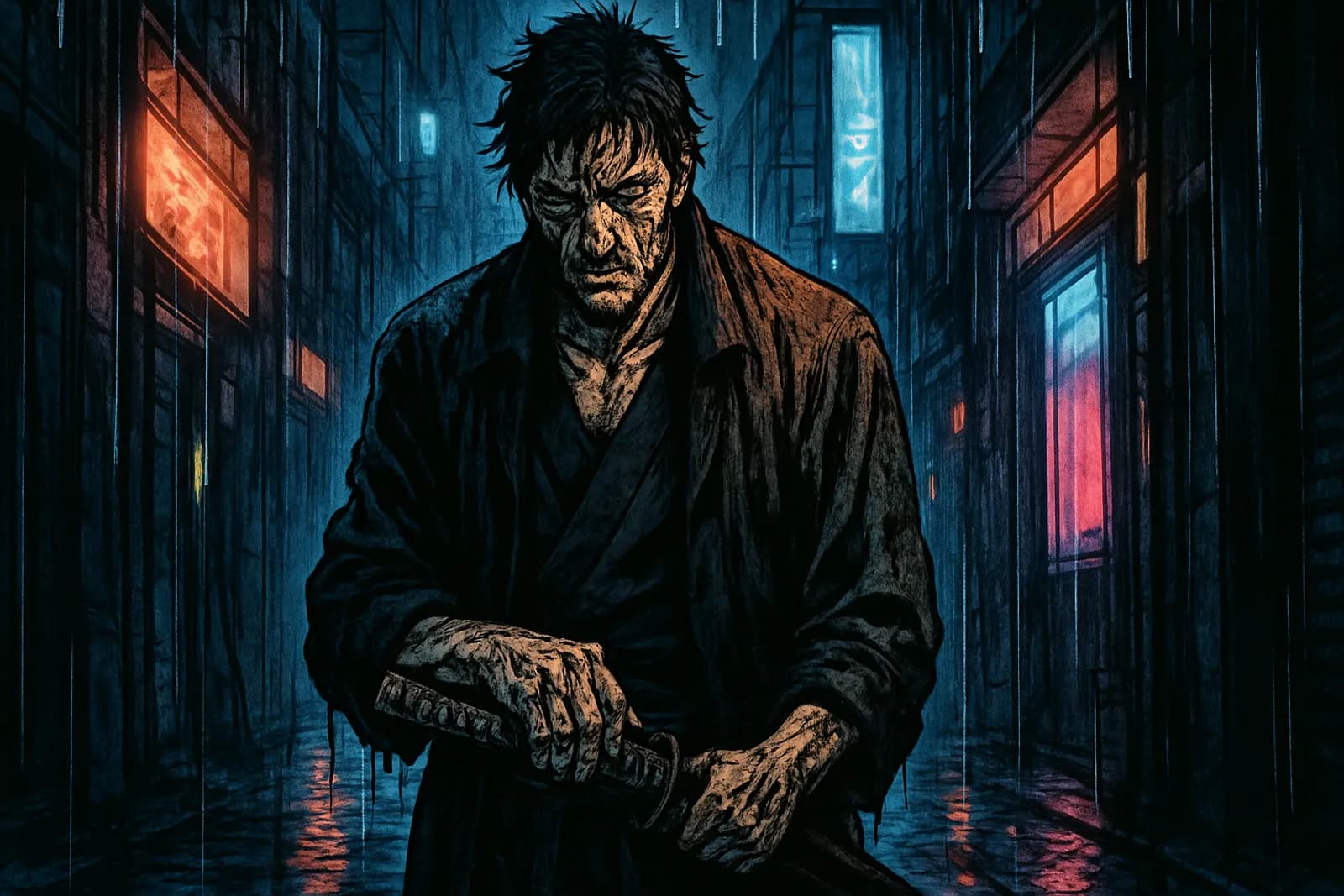
- Gritty, heavier inking — deep blacks, fine cross-hatching, and texture instead of clean flat shadow.
- Restrained expression — fewer big cartoon reactions; emotion shown through subtle faces and body language.
- Cinematic, sometimes still paneling — quiet panels, negative space, and a willingness to let a moment breathe.
Is Seinen Just for Adult Men?
No. Like every manga demographic, the label describes the marketing target, not the actual readership. Seinen series like Berserk, Vinland Saga, and Monster have enormous audiences of women, teens, and readers far outside Japan. The "adult men" label persists because Japanese publishers organize their magazines that way — but a story doesn't check your ID.
The practical takeaway for a reader or creator: treat seinen as a signal that a series is willing to be mature, slow, and morally complicated — not as a fence around who's allowed to enjoy it.
Creating Your Own Seinen With AI
Seinen is one of the most rewarding genres to create, because its power comes from restraint and atmosphere rather than spectacle — and those translate well to AI-generated art.
On Gootaku, you write the story and the AI draws it. To lean seinen:
- Choose a grounded premise — a war, a crime, a career, a moral dilemma. Skip the chosen-one setup.
- Pick the seinen style in Gootaku Studio so panels render with realistic proportions and gritty detail.
- Write for weight — fewer panels, more silence; let consequences land instead of resolving them instantly.
- Let characters be flawed — the genre rewards ambiguity over clean heroism.
- Generate, refine, and publish to the community feed when it's ready.
Start free on Gootaku → — 1 free token to start and 1 more every 2 days.
More ways to bring this to life
Frequently Asked Questions
Is seinen the same as adult or 18+ content?
No. "Seinen" means it's aimed at adult readers, but the vast majority of seinen is not pornographic. It can contain mature violence, language, and themes, but the label is about a target demographic, not an explicit rating. Plenty of seinen — like Yotsuba&! — is gentle and all-ages in content.
What's the difference between seinen and shonen?
Shonen targets boys (~12–18) with themes of friendship, growth, and heroism, drawn in a bold, dynamic style. Seinen targets adult men (~18–40) with mature themes, moral ambiguity, realistic violence, and a more detailed, grounded art style. Both can be action-heavy; the difference is the assumed reader's age and the resulting depth.
Is Attack on Titan seinen?
In tone, it reads like seinen — it's dark, brutal, and politically complex. But technically it's shonen, because it ran in a shonen magazine (Bessatsu Shōnen Magazine). It's the most cited example of why the demographic label doesn't always match a story's content.
How do you pronounce seinen?
Roughly say-nen — two syllables, with the "sei" like the English word "say." It comes from the kanji 青年, meaning "young man."
Can I make a seinen-style manga without drawing skills?
Yes. With an AI tool like Gootaku, you write the story and the AI draws the panels in your chosen style. Seinen's realistic, atmospheric look is one of the available styles, so you can focus on plot, mood, and pacing instead of rendering anatomy by hand.
Keep Reading
- Try the AI Manga Maker → — generate manga panels from text, free to start
- Seinen Manga Style Guide
- What Is Shonen?
- Josei Manga Style Guide
- What Is Manhwa?
- What Is Gootaku?
Ready to create your own manga?
Start free — no credit card required. 1 free AI generation on signup, +1 every 2 days.
Start CreatingOn the go? Get the Gootaku iPhone app.
Related guides
Seinen Manga Style — Complete Guide for AI Creators
Master the dark, realistic look of seinen manga — gritty linework, mature themes, detailed art. With…
What Is Shojo? Bigger Than "Romance for Girls
Shojo (少女) means “young girl”: manga for teen girls, focused on emotion and relationships, not only …
What Is Shonen? Definition, Examples & Origins
Shonen (少年) means “young boy”: manga for teen boys, built on action, rivalry and growth. The shonen …
What Is Slice of Life? The Everyday-Moments Genre Explained
Slice of life is the manga/anime genre built around ordinary, everyday moments instead of dramatic p…
Josei Manga Style Guide — Adult Romance for AI Creators
Josei is manga for adult women — sophisticated romance, career drama, complex relationships. Master …
Magical Girl Manga Style — Complete AI Guide
Master the mahou shoujo look — elaborate transformation outfits, sparkle effects, pastel and jewel-t…