What Is Slice of Life? The Everyday-Moments Genre Explained
Slice of life is the manga/anime genre built around ordinary, everyday moments instead of dramatic plots. Learn its meaning, subtypes, and how to make your own.
Written by Bugra, founder of Gootaku
Quick answer
Slice of life is a genre of manga and anime that depicts ordinary everyday experiences, such as school days, quiet friendships and small routines, rather than building a story around a dramatic plot, conflict or villain. K-On! and Yotsuba&! are typical examples.
Contents
Slice of life is a genre of manga and anime that depicts ordinary, everyday experiences — school days, quiet friendships, small routines, seasonal changes — rather than building a story around a dramatic external plot, conflict, or villain.
If you've watched K-On!, Yotsuba&!, Barakamon, or Non Non Biyori, you already know the shape of slice of life. Nothing is trying to save the world. There's no demon lord, no tournament arc, no ticking clock. Instead, you get a group of friends practicing music after school, a curious little girl exploring her neighborhood, a calligrapher adjusting to island life, or a handful of kids doing nothing much on a lazy summer afternoon — and somehow that's enough to carry an entire series.
Key facts
- Japanese term: 日常系 (nichijou-kei), "everyday-type"; the calmer "healing" branch is called iyashikei.
- Core engine: characters, routine and atmosphere instead of a villain, quest or escalating plot.
- Common format: many series run as 4-koma (four-panel) strips, e.g. K-On!, which began as a 4-koma manga by kakifly.
- Classics: Yotsuba&! (Kiyohiko Azuma, from 2003), K-On! (anime 2009), Non Non Biyori, Barakamon.
- Recent example: Skip and Loafer (manga by Misaki Takamatsu, anime 2023) is a well-received modern school-life take.
---
What "Slice of Life" Means
The term describes stories that depict everyday, ordinary experiences rather than dramatic plot arcs. Instead of asking "what happens next in the story," a slice-of-life work asks "what is it like to spend time with these people." Conflict, when it exists at all, tends to be small and personal — a misunderstanding between friends, nerves before a school festival, the quiet ache of missing someone — rather than a battle, a mystery, or a quest.
In Japanese, the closely related term is 日常系 (nichijou-kei), literally "everyday-type." It's the label fans and critics use for anime and manga built around the rhythms of daily life — the classroom, the clubroom, the kitchen table — rather than around an escalating plot. Not every slice-of-life work is officially tagged nichijou-kei, but the two terms overlap heavily and are often used interchangeably.
---
The Core Premise
Slice of life runs on a different engine than most genres. Instead of plot, it leans on:
- Low or no external conflict. There's rarely a villain, an enemy faction, or a life-or-death stake driving the story forward.
- Focus on mundane moments. A conversation over tea, a walk home, a rainy afternoon stuck inside — these aren't filler, they're the point.
- Character relationships as the throughline. The "plot," to the extent there is one, is really the slow deepening of friendships, family bonds, or a found community.
- Atmosphere over plot. Pacing is unhurried. A chapter can pass with nothing "happening" and still feel complete, because the goal is to sit with a mood or a feeling rather than resolve a conflict.
---
Common Slice-of-Life Subtypes
Slice of life isn't one flavor. It branches into several recognizable subtypes:
School life
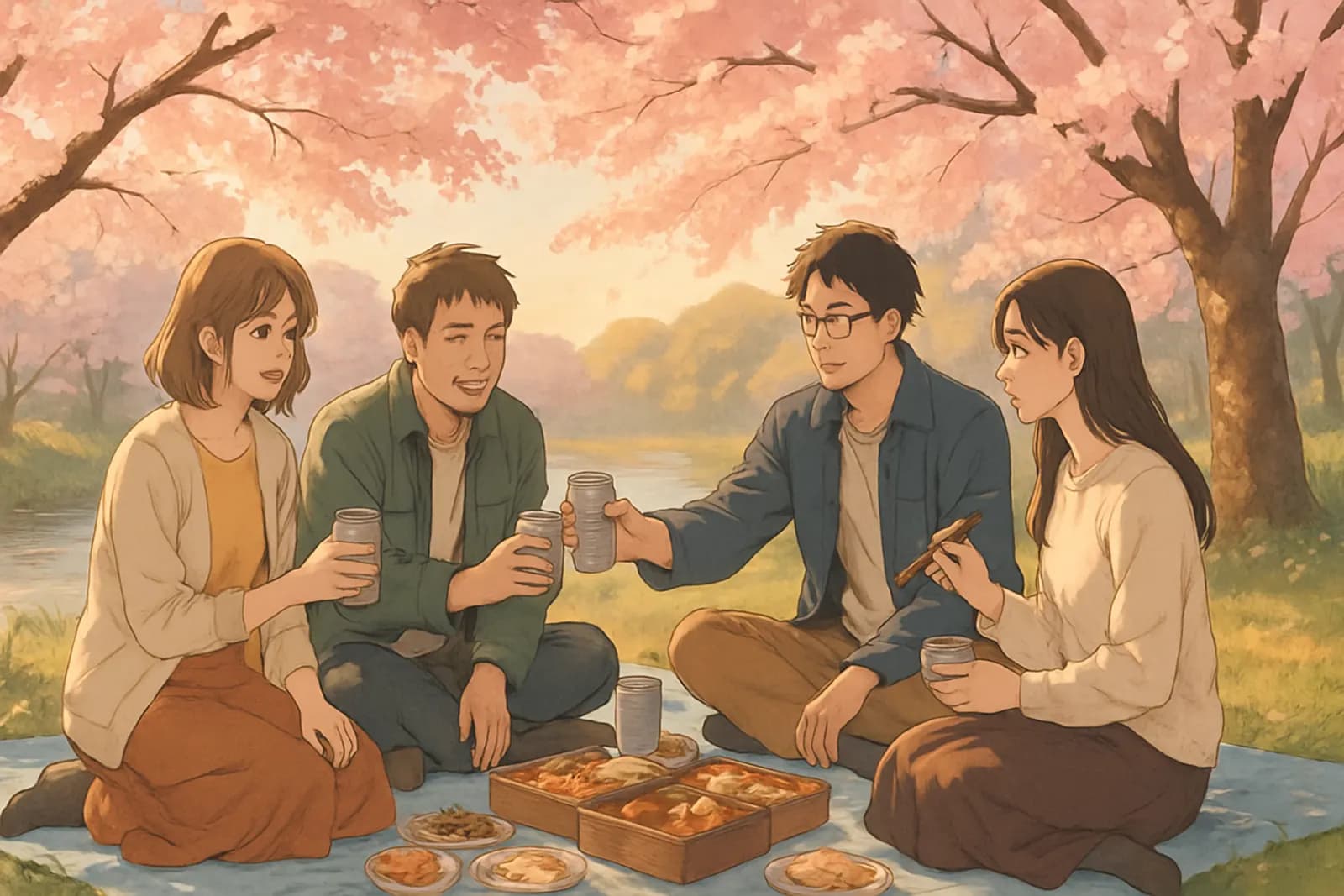
The most common setting — clubs, classrooms, festivals, and the daily texture of student life. K-On! is the textbook example: a light music club that mostly just hangs out, practices, and eats cake together.Iyashikei (healing/relaxing)
A gentler, more atmospheric branch focused on calm, restorative scenes — pastoral countryside settings, slow mornings, nature, and quiet company. Non Non Biyori, set in a tiny rural village with almost no other children around, is a clear example of this "healing" mode, where the point is to soothe the reader rather than entertain them with incident. For the full definition and a reading list, see iyashikei meaning.Workplace/adult slice of life
Slice of life isn't only about kids and school. Stories set in adult life — a new job, moving to a small town, adjusting to a different pace of living — belong here too. Barakamon, about a young calligrapher exiled to a remote island after losing his temper, is a workplace-and-relocation slice-of-life story built around adult growth rather than teenage routine.Slice-of-life comedy (4-koma gag format)
Many slice-of-life series run as 4-koma (four-panel gag strips), delivering short comedic beats built around character quirks rather than long-form plot. Yotsuba&!, following a relentlessly curious young girl discovering ordinary things for the first time, blends gag-comedy timing with genuine warmth — comedic on the surface, but still fundamentally about everyday life.| Subtype | Typical setting | Tone | Example | |---|---|---|---| | School life | Classrooms, clubs, festivals | Warm, light | K-On! | | Iyashikei | Countryside, nature, quiet homes | Calm, soothing | Non Non Biyori | | Workplace / adult | Jobs, moving, new towns | Reflective | Barakamon | | Comedy (often 4-koma) | Anywhere everyday | Gag-driven but warm | Yotsuba&! |
---
Why Slice of Life Resonates
Slice of life has a devoted, often lifelong fanbase, for a few clear reasons:
1. Comfort. Without a looming threat or a plot demanding resolution, slice of life is low-pressure to read. You can pick it up for five minutes or an hour and it never feels like you're falling behind a plot.
2. Low-stakes escapism. The fantasy isn't power or adventure — it's peace. A cozy classroom, a warm kitchen, a quiet afternoon with friends. For readers dealing with a stressful world, that gentleness is the appeal, not a weakness.
3. Relatability. Because the stories are built from ordinary life, readers see themselves in them constantly — a first job, a shy friendship, a boring rainy day that turns out to matter.
4. Character-driven appeal. With no plot to lean on, slice of life lives or dies on its characters. Readers come back because they genuinely like spending time with the cast, the same way you'd look forward to hanging out with real friends.
---
Slice of Life vs Other Genres
Slice of life sits at the opposite end of the spectrum from genres with strong external plot arcs. Shonen is built around escalating conflict, training, and tournament-style stakes — the opposite engine entirely. Isekai is built around a dramatic premise (a character crossing into another world) and usually keeps a clear goal driving the plot forward, whether that's survival, power, or getting home.
That said, slice of life isn't always a standalone genre — it frequently shows up as a secondary flavor layered into other genres. A shonen series might slow down for a slice-of-life training-arc downtime chapter; a romance manga might spend entire volumes on quiet, everyday moments between its leads before any major plot beat. When that happens, it's usually described as having "slice-of-life elements" rather than being a slice-of-life series outright — the distinction is whether everyday moments are the whole point, or just a pause between plot beats.
---
How to Build Your Own Slice-of-Life Story
Slice of life is one of the most approachable genres to start with, because it doesn't require inventing an elaborate plot — it requires a setting and people worth spending time with.
- Pick a setting. School, workplace, or small town — somewhere your cast will naturally cross paths again and again.
- Build an ensemble cast with distinct small quirks. You don't need dramatic backstories — a character who's always half-asleep, one who overplans everything, one who's weirdly good at one specific thing. Small, consistent quirks do the heavy lifting.
- Structure around seasons or routines instead of plot arcs. Let the school year, the changing weather, or a weekly ritual (Sunday breakfast, after-school club) give your story shape instead of a villain or quest.
- Let small moments carry weight. A missed train, a shared umbrella, a compliment that lands wrong — treat these like the "big" scenes, because in slice of life, they are.
- Decide comedic vs iyashikei tone early. A gag-driven 4-koma rhythm and a slow, healing atmosphere call for very different pacing and art choices — pick one lane so your story stays consistent.
For the comedic, gag-timing side of slice of life, our Comedy Manga Style Guide covers pacing and panel timing that pairs well with 4-koma-style slice of life. For the visual language of the genre itself — palettes, everyday settings, and character expression — see our Slice of Life Manga Style Guide.
Start your slice-of-life manga on Gootaku → — 1 free token to start and 1 more every 2 days, no card required.
---
Keep Reading
- Slice of Life Manga Style Guide — Visual codes and how to render everyday-life art
- Comedy Manga Style Guide — Gag timing and panel pacing for lighter slice-of-life beats
- What Is Shojo Manga? — The demographic slice-of-life romance often overlaps with
- What Is Josei Manga? — Where adult-life slice of life frequently lives
- What Is Gootaku? — The AI tool where you write and the AI draws
More ways to bring this to life
FAQ
What does slice of life mean in anime and manga? Slice of life refers to stories that depict ordinary, everyday experiences — school days, friendships, routines, small moments — rather than building around a dramatic plot, conflict, or villain. The focus is on atmosphere and character over incident.
What is nichijou-kei? Nichijou-kei (日常系) is the Japanese term for "everyday-type" stories, closely related to and often used interchangeably with slice of life. It describes anime and manga built around the rhythms of daily life rather than an escalating plot.
What is iyashikei? Iyashikei is a "healing" or relaxing subtype of slice of life, focused on calm, restorative scenes — quiet countryside settings, gentle pacing, and atmosphere meant to soothe the reader rather than entertain through incident. Non Non Biyori is a well-known example.
Can slice of life overlap with other genres like shonen or isekai? Yes. Slice of life often appears as a secondary flavor within plot-driven genres — a shonen series might include a slower, everyday-life chapter, or a romance series might spend long stretches on quiet daily moments. It's only considered a slice-of-life series outright when those everyday moments are the whole point, not just a pause between plot beats.
Do I need to be able to draw to make a slice-of-life manga? No. With an AI manga tool like Gootaku, you write the story and the AI generates the art. You describe the everyday moment — a club hangout, a quiet walk, a shared meal — and produce manga panels without drawing them yourself.
Ready to create your own manga?
Start free — no credit card required. 1 free AI generation on signup, +1 every 2 days.
Start CreatingOn the go? Get the Gootaku iPhone app.
Related guides
Slice-of-Life Manga Style — Complete AI Guide
Master the slice of life manga style — soft linework, warm natural light, cozy iyashikei mood, gentl…
What Is Supernatural Manga? The Hidden-World Genre Explained
Supernatural manga puts spirits, curses, and psychic powers inside our own world. Learn its meaning,…
What Is Yuri? Meaning, and How It's Different From Shojo-ai
Yuri (百合, “lily”) is the genre about romance between women in manga and anime. What yuri means, how …
Harem Manga Meaning: Harem and Reverse Harem Explained
Harem manga means one protagonist with several love interests. What harem and reverse harem mean, th…
Seinen Manga Style — Complete Guide for AI Creators
Master the dark, realistic look of seinen manga — gritty linework, mature themes, detailed art. With…
Shojo Manga Style — Complete Guide for AI Creators
Master the romantic, sparkly look of shojo manga — big eyes, flower motifs, soft screentones, emotio…