Manga vs Manhwa vs Manhua — The Real Differences
Manga is Japanese, manhwa is Korean, manhua is Chinese. Here's how they differ in reading direction, color, format, art style and genre, with a quick table.
Written by Bugra, founder of Gootaku
Contents
Quick Answer
Manga is Japanese comics, manhwa is Korean comics, and manhua is Chinese comics (from mainland China, Hong Kong, and Taiwan). All three words come from the same Chinese characters (漫画) and literally mean "comics" in their own language. The practical differences:
- Manga reads right to left, is mostly black and white, and is printed in pages, then collected into volumes.
- Manhwa reads left to right, is mostly full color, and today is mostly a vertical-scroll webcomic read on phones.
- Manhua reads left to right, is mostly full color, and is known for cultivation and martial-arts fantasy.
The Comparison Table
| | Manga | Manhwa | Manhua | |---|---|---|---| | Origin | Japan | South Korea | China, Hong Kong, Taiwan | | Native word | 漫画 (manga) | 만화 (manhwa) | 漫画 / 漫畫 (manhua) | | Reading direction | Right to left | Left to right | Left to right | | Color | Mostly black and white | Mostly full color | Mostly full color | | Main format | Printed pages, collected volumes | Vertical-scroll webtoon | Vertical scroll or long pages | | Release rhythm | Weekly or monthly magazine chapters | Weekly episodes on apps | Frequent episodes on apps | | Signature genres | Every demographic: shonen, shojo, seinen, josei | Romance fantasy, regression, leveling | Cultivation, wuxia, palace drama | | Famous examples | One Piece, Naruto, Nana | Solo Leveling, Tower of God, True Beauty | Tales of Demons and Gods, Battle Through the Heavens | | Animated adaptation | Anime | Anime / Korean animation | Donghua |
Why the Same Word Became Three Words
The characters 漫 ("impromptu") and 画 ("picture") were used in Japan, Korea, and China for illustrated work long before modern comics existed. Each language reads them differently: manga in Japanese, manhwa in Korean, manhua in Mandarin.
In English, the three words picked up a narrower meaning: they now point to where a comic comes from, not just what it is. A Korean reader calls One Piece "manhwa" in Korean, because in Korean that just means comics. An English-speaking reader calls it manga, because it's Japanese.
Difference 1: Reading Direction
This is the fastest way to tell them apart in print.
- Manga follows the direction of traditional Japanese writing: you start at the right side of the page, read panels right to left, and open the book from what Western readers think of as the back.
- Manhwa and manhua read left to right, like English books and Western comics.
Difference 2: Color
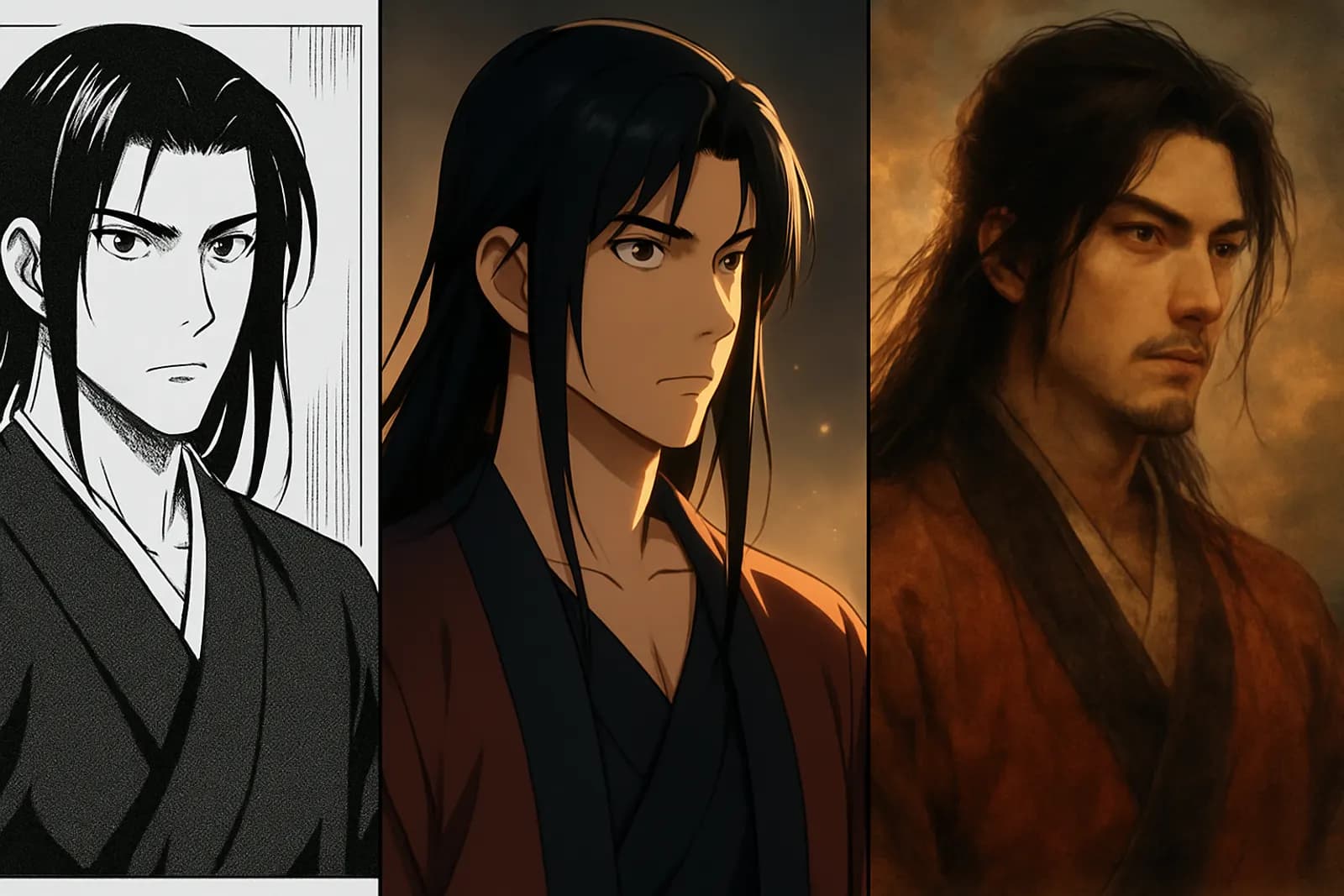
- Manga is mostly black and white. It grew up in cheap weekly magazines printed on newsprint, so artists developed a rich language of ink, hatching, and screentone to create mood without color. Color pages exist but are usually reserved for chapter openers and special releases.
- Manhwa is mostly full color today. Korean webcomics boomed online, where color costs nothing extra to print, so color became part of the expected style.
- Manhua is also mostly full color in its digital form, often with painterly rendering and glow effects. Older Hong Kong comics were already in color, with a heavy painted look.
Difference 3: Format and Layout
Manga: designed for the page
A manga chapter is designed as a sequence of two-page spreads. Artists control pacing with panel size, page turns, and splash pages. A dramatic reveal often lands right after a page turn, because the artist knows you can't see the next page in advance.
Manhwa: designed for the scroll
Modern manhwa is mostly designed as a long vertical strip — the webtoon format. Instead of page turns, artists use white space: a long gap between panels slows you down before a reveal, and a tall panel lets a falling character or towering monster stretch down the screen. If you want to see how that works in practice, read the webtoon vertical panel format guide.
Manhua: both
Digital manhua mixes both approaches. Some series scroll like webtoons; others keep a page-like layout but are read as continuous long pages on apps.
Difference 4: Art Style
These are tendencies, not rules — artists cross over constantly.
- Manga favors strong line work, expressive faces, big emotional reactions, speed lines, and stylized proportions that vary a lot by genre. A shonen action series and a josei drama can look completely different.
- Manhwa tends toward more realistic, "photogenic" proportions: tall characters, fashionable clothes, glossy hair, cinematic lighting, and polished digital rendering.
- Manhua often leans on Chinese historical aesthetics: flowing robes, long hair with ornaments, misty mountains, pavilions, and visible energy auras during fights.
Difference 5: Genres
All three cover romance, action, comedy, and horror, but each has a signature.
Manga: organized by demographic
Japanese publishing sorts manga by the magazine's target reader: shonen (teen boys), shojo (teen girls), seinen (adult men), josei (adult women), and kodomo (children). Genres like isekai, mecha, and slice of life sit on top of that.
Manhwa: romance fantasy and leveling
Korean webcomics popularized a few genres that now feel distinctly manhwa: romance fantasy (often a heroine reborn as a villainess in a novel), regression (a hero returns to the past with future knowledge), and leveling or "hunter" stories with dungeons and status windows. See What Is Manhwa? for the full picture.
Manhua: cultivation and wuxia
Chinese comics are best known for cultivation — characters refining inner energy to climb realms of power — plus wuxia martial-arts adventure and palace intrigue. See What Is Manhua?.
Difference 6: How They're Published and Read
- Manga is usually serialized in a weekly or monthly magazine (print or digital), then collected into volumes called tankobon. Popular series get anime adaptations.
- Manhwa is usually serialized weekly on apps such as Naver Webtoon or KakaoPage. Many are adapted from Korean web novels, and popular ones become K-dramas or animated series.
- Manhua is serialized on Chinese apps and platforms, frequently adapted from Chinese web novels. Popular titles become donghua (Chinese animation).
How to Tell Them Apart in Five Seconds
- Look at the reading order. Right to left? Almost certainly manga.
- Look at the color. Black-and-white with screentone? Probably manga. Full color? Manhwa or manhua.
- Look at the names. Japanese names (Tanaka, Sakura) point to manga; Korean names (Ji-woo, Min-jun) to manhwa; Chinese names (Xiao, Lin, Wei) to manhua.
- Look at the setting. Robes, sects, and qi suggest manhua. Dungeons, hunters, and status windows suggest manhwa. School uniforms and Japanese streets suggest manga.
- Check the publisher. Shueisha, Kodansha, and Shogakukan are Japanese; Naver and Kakao are Korean; Tencent, Kuaikan, and Bilibili are Chinese.
Which One Should You Read?
- If you love tight page-by-page pacing and black-and-white ink, start with manga.
- If you want full color, quick phone reading, and romance or leveling stories, try manhwa.
- If you enjoy long power-progression sagas and Chinese mythology, try manhua.
Making Your Own: Manga or Manhwa Style With AI
You don't have to pick a side to create one. In Gootaku, the Manga maker offers black-and-white styles (Classic B&W, Shōnen, Shōjo, Seinen, Chibi Manga), and the Comic maker offers a full-color Webtoon style that suits manhwa and manhua. Each image costs 1 token and comes out as one panel; you can place up to 4 panels on a page and add dialogue, narration, and sound effects that show up in your export. In Manga mode the dialogue balloon sits on the right, matching right-to-left reading.
Try the Manhwa Maker → — 1 free token to start and 1 more every 2 days, no card required.
---
More ways to bring this to life
FAQ
Is manhwa the same as manga? No. Manhwa is Korean and manga is Japanese. Both words mean "comics," but manhwa reads left to right and is usually full color and vertical-scroll, while manga reads right to left and is usually black and white.
What is the difference between manhwa and manhua? Manhwa is from South Korea and manhua is from China, Hong Kong, or Taiwan. Both are usually full color and read left to right online. Manhwa is known for romance fantasy and leveling stories; manhua for cultivation and wuxia.
Why is manga black and white but manhwa is in color? Manga grew up in cheap printed magazines where color was expensive, so black-and-white ink became its style. Modern manhwa grew up online, where color costs nothing extra to publish.
Is Solo Leveling manga or manhwa? Manhwa. It's a Korean webcomic adapted from a Korean web novel. Its anime adaptation was produced in Japan, which causes the confusion.
Do you read manhwa left to right? Yes. Manhwa reads left to right, and most modern manhwa is a vertical scroll, so you simply read from top to bottom.
Is a webtoon the same as manhwa? Not exactly. Webtoon is a format (a vertical-scroll digital comic), and manhwa means Korean comics. Most modern manhwa uses the webtoon format, but webtoons are now made in many countries.
---
Keep Reading
- What Is Manhwa? — Korean comics in depth
- What Is Manhua? — Chinese comics in depth
- Manga vs Comic vs Webtoon — How manga compares to Western comics
- Manga Glossary — Every term you'll run into
- Types of Manga Genres Explained — Demographics and genres overview
Ready to create your own manga?
Start free — no credit card required. 1 free AI generation on signup, +1 every 2 days.
Start CreatingOn the go? Get the Gootaku iPhone app.
Related guides
What Is Gootaku? The AI Manga Creator, Explained
Gootaku is an AI platform that turns written stories into manga, comics, and GIFs — no drawing neede…
AI Comic Maker for Kickstarter — Preview Pages That Convert
How to use AI to generate the preview pages, cover art, and sample panels that make a comic Kickstar…
AI Manga Maker vs Hiring an Artist — Cost Comparison 2026
What it costs to commission manga panels from a freelance artist versus generating them with AI — re…
AI Manga vs Traditional Drawing — Which to Use in 2026?
An honest comparison of AI manga generation and traditional drawing — speed, cost, control, skill gr…
Photo to Manga AI — Turn Yourself Into a Manga OC
Photo to manga AI turns your selfie into an anime-style character. Learn how it works, how to write …
Text to Anime Generator — Turn Prompts into Anime Scenes
Learn how text to anime generators work, how to write anime scene prompts, and how to use Gootaku fo…