Dandere Meaning: The Shy, Quiet Character, Explained
Dandere means a shy, quiet character who barely speaks until they trust someone, then opens up warmly. Origin, famous dandere characters, and how to write one.
Written by Bugra, founder of Gootaku
Contents
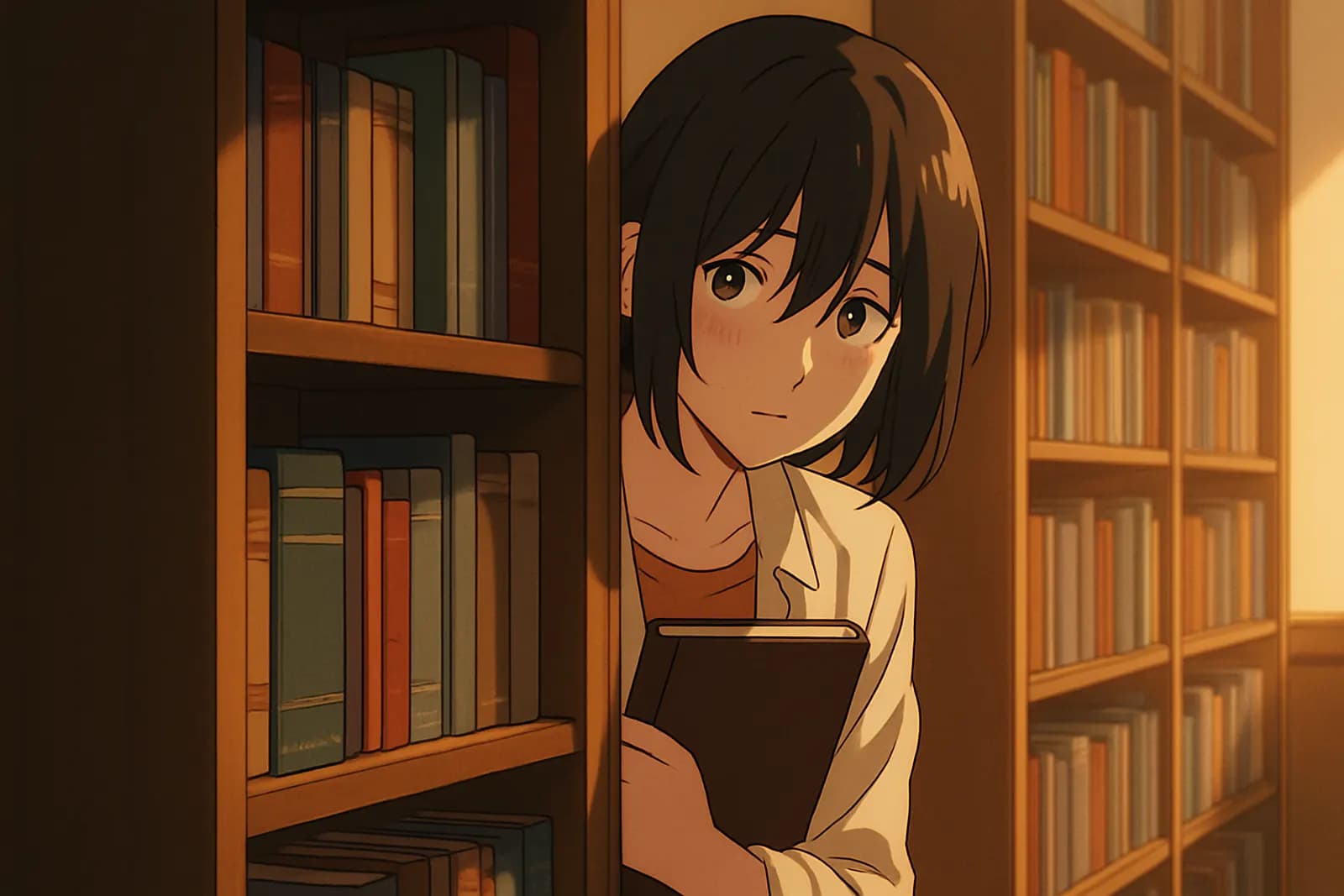
A dandere (ダンデレ, dahn-deh-reh) is a shy, quiet character who barely speaks around others, especially the person they like, but who becomes warm, sweet and talkative once they feel safe. The word joins danmari (黙り, silence) with dere-dere (lovey-dovey).
Danderes are not cold, like a kuudere, and not hostile, like a tsundere. They want to connect; they just cannot get the words out yet.
Key facts
- Japanese: ダンデレ, from danmari (黙り, staying silent) + dere-dere (デレデレ, affectionate).
- Core trait: shyness and social anxiety, not lack of feeling.
- Classic examples: Hinata Hyuga (Naruto), Shoko Komi (Komi Can't Communicate, serialized from 2016), Hitori Gotoh (Bocchi the Rock!).
- Typical arc: from silence to self-expression, often through one patient friend or love interest.
- Easily confused with: kuudere. The difference is anxiety (dandere) versus composure (kuudere).
What "Dandere" Literally Means
Danmari means keeping quiet or holding one's tongue. A dandere's silence is not a choice to look cool; it is a struggle. They rehearse what they want to say, freeze, and say nothing. When someone is patient with them, the dere side emerges: kind, attentive, sometimes surprisingly funny.
Common dandere behavior:
- speaking softly or in fragments ("U-um..."), or not at all;
- avoiding eye contact, hiding behind hair, a book or a hood;
- communicating through writing, gestures or small gifts;
- opening up completely with one or two trusted people.
Dandere vs Other Dere Types
| Archetype | Why they are hard to read | What they want | How they change | |-----------|---------------------------|----------------|-----------------| | Dandere | Shyness, anxiety | To connect but cannot yet | Gains confidence | | Kuudere | Composure, restraint | Often unsure they want to | Allows feelings | | Tsundere | Pride, defensiveness | To be loved without admitting it | Drops the act | | Yandere | Not hard to read at all | Total possession | Usually does not | | Deredere | Not hard to read | Everyone to be happy | Rarely needs to |
The fastest test: put the character in a room with a stranger. A kuudere stays calm. A dandere panics quietly.
For every archetype in one place, see dere types explained.
Famous Dandere Characters
- Hinata Hyuga (Naruto) - painfully shy, devoted to Naruto from afar for years, and steadily braver over the series.
- Shoko Komi (Komi Can't Communicate) - a girl with severe communication anxiety who talks through notebook writing; the whole series is a dandere arc.
- Hitori "Bocchi" Gotoh (Bocchi the Rock!) - an anxious guitarist whose shyness is played for comedy and sympathy in equal measure.
- Shoko Nishimiya (A Silent Voice) - often grouped with danderes for her gentleness, though her quiet comes from deafness and bullying rather than shyness alone; a good reminder that silence has many causes.
- Male danderes appear too, often as quiet bookish boys in shojo or as shy teammates in sports manga.
Why Readers Root for Danderes
- They are relatable. Plenty of readers know what it is to have the right words and not say them.
- Every small win counts. A dandere saying one full sentence can be a chapter's climax.
- They reward patience. The characters who are kind to a dandere become more likeable too.
- They suit comedy and drama. Social anxiety can be played gently for laughs (Bocchi) or seriously (A Silent Voice).
Danderes Across Genres
- Romance. The shy classmate who has liked the lead for years without saying a word. The confession scene is the climax, and the reader has been waiting for it as long as she has.
- Comedy. Anxiety played for warm laughs: overthinking a simple greeting, rehearsing a phone call, fleeing a crowded room. Bocchi the Rock! is the modern benchmark.
- Action and shonen. The quiet teammate who hesitates in early fights and finds courage when friends are in danger. Hinata's growth in Naruto follows this path.
- Sports. The timid player whose talent only appears on the court or field, where they finally feel at home.
- Slice of life and iyashikei. Gentle stories where making one new friend is the whole arc.
Common Dandere Mistakes
- Shyness with no inner life. If readers never learn what the character thinks, they become furniture. Use inner monologue.
- The makeover fix. Solving shyness with a new haircut or one pep talk skips the actual growth. Confidence should come in steps.
- Treating silence as agreement. Other characters who ignore a dandere's discomfort read as unkind unless the story addresses it.
- Confusing dandere with kuudere. If the character is calm and unbothered, they are a kuudere. A dandere is visibly nervous.
- Never letting them talk. Even the shyest character needs at least one scene where their real voice comes through, or readers cannot get to know them.
How to Write a Dandere
- Give them an inner voice. Narration boxes or thought bubbles let readers hear what the character cannot say aloud. Manga uses this constantly.
- Track progress in tiny steps. Eye contact, then a nod, then a word, then a joke. Each is a milestone.
- Give them a channel. Writing, music, art, cooking. Komi's notebook and Bocchi's guitar both let the character "speak" before they can talk.
- Avoid making shyness the punchline forever. Let them succeed sometimes, or the arc stalls.
- Pair with a patient lead. A dandere needs someone who waits. That relationship is usually the heart of the story.
Drawing a Dandere With Gootaku
Shyness reads through body language, which you can describe directly in a prompt. Gootaku's Manga Maker generates one panel per token:
- Shy panel: "girl with long dark hair covering one eye, hugging a notebook to her chest, looking at the floor, crowded classroom behind her, Shōjo style."
- Opening-up panel: "same girl, small genuine smile, holding up the open notebook toward someone, warm afternoon light."
You start with 1 free token and earn 1 more every 2 days.
More ways to bring this to life
FAQ
What does dandere mean?
A dandere is a shy, quiet character who rarely speaks until they feel comfortable with someone, then shows a warm and affectionate side. The word combines danmari (silence) and dere-dere (lovey-dovey).
What is the difference between dandere and kuudere?
Danderes are quiet because they are shy and anxious; kuuderes are quiet because they are calm and composed. A dandere wants to speak and cannot; a kuudere simply does not need to.
Is Hinata a dandere?
Yes. Hinata Hyuga from Naruto is one of the most frequently cited dandere characters.
Can a dandere be the main character?
Absolutely. Komi Can't Communicate and Bocchi the Rock! both center a dandere, and their growth drives the whole story.
Is a dandere the same as an introvert?
Not exactly. Introversion is about where a person gets their energy; a dandere is specifically shy and anxious around others, especially someone they like. Many danderes are introverts, but plenty of introverted characters are calm and confident, which makes them closer to a kuudere.
How do you draw a dandere in manga?
Use closed body language: hunched shoulders, hands clasped or holding an object, eyes turned down or hidden by hair. Small speech balloons, trailing dots and thought bubbles show the gap between what they think and what they manage to say.
Keep Reading
- Dere Types Explained - all the dere archetypes side by side
- Kuudere Meaning - quiet from composure, not shyness
- What Is Slice of Life Manga? - where many dandere stories live
- How to Design a Manga OC From Scratch - from archetype to person
- Manga Speech Bubble Design Guide - balloons for quiet characters
Ready to create your own manga?
Start free — no credit card required. 1 free AI generation on signup, +1 every 2 days.
Start CreatingOn the go? Get the Gootaku iPhone app.
Related guides
Dere Types Explained: Tsundere, Yandere, Kuudere, Dandere
Every dere type in one guide. What tsundere, yandere, kuudere, dandere, deredere, himedere and more …
Kuudere Meaning: The Cool, Calm Character, Explained
Kuudere means a character who seems cold, calm and emotionless but cares deeply underneath. Origin, …
How to Design a Manga OC From Scratch (No Drawing Required)
A step-by-step process for designing an original manga character (OC) from a blank idea to a locked,…
How to Design a Manga Protagonist — Character Guide
Design a memorable manga protagonist — clear visual identity, compelling backstory, and AI-ready cha…
Manga Terms Glossary — Essential Definitions
Complete reference for manga terminology — from screentone to webtoon, chapter structure to visual t…
Manga Panel Aspect Ratios Explained (What Gootaku Generates)
A practical guide to manga panel aspect ratios — standard sizes, when to use each one, and how to pr…