Kuudere Meaning: The Cool, Calm Character, Explained
Kuudere means a character who seems cold, calm and emotionless but cares deeply underneath. Origin, famous kuudere characters, and how to write one.
Written by Bugra, founder of Gootaku
Contents
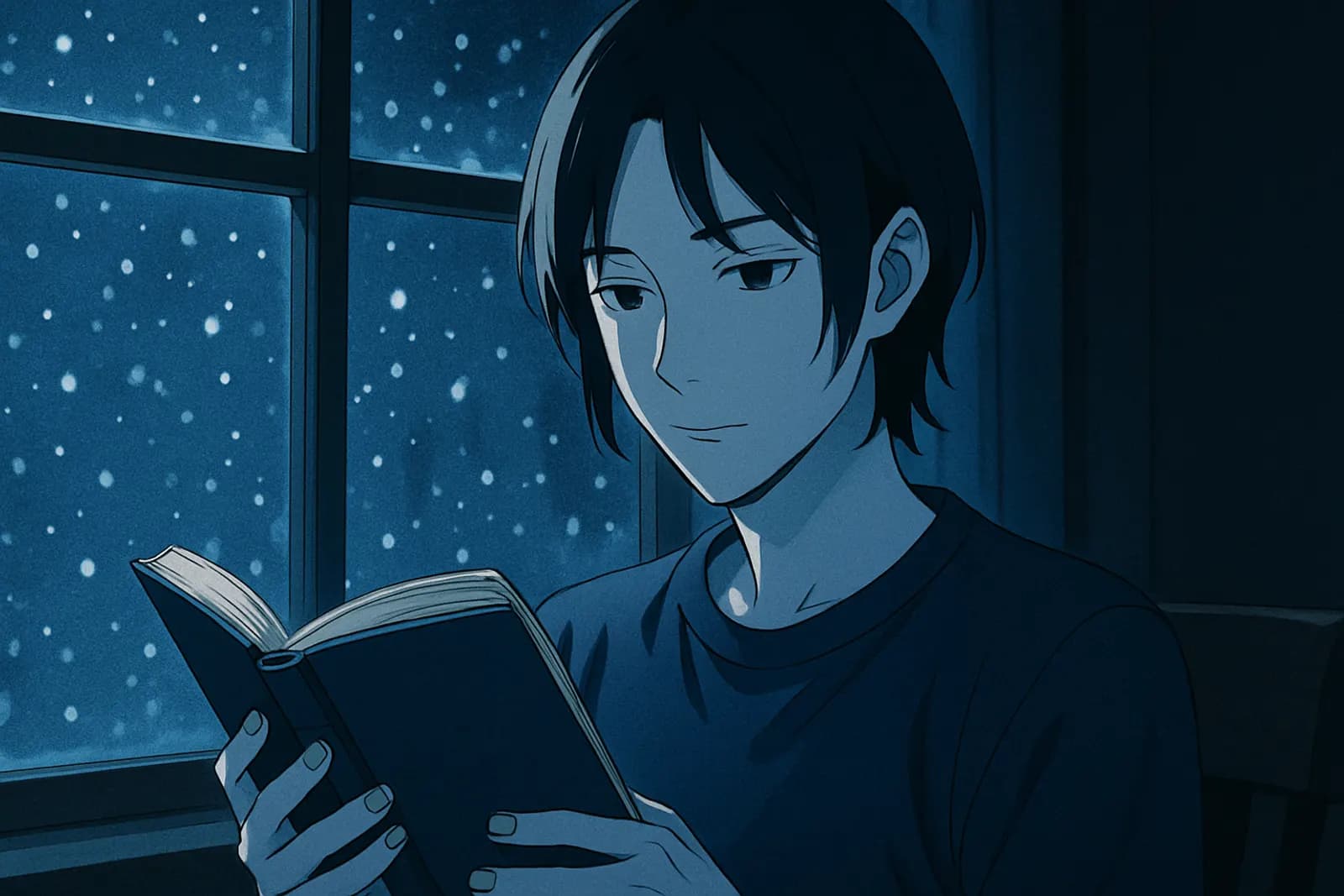
A kuudere (クーデレ, koo-deh-reh) is a character who appears cool, calm and almost emotionless, but who quietly cares about someone and shows it in small, understated ways. The word joins the English loanword kūru (クール, "cool") with dere-dere (lovey-dovey).
Where a tsundere covers affection with anger, a kuudere covers it with composure. They rarely raise their voice, rarely smile, and mean every word they say.
Key facts
- Japanese: クーデレ, from kūru (クール, the English word "cool") + dere-dere (デレデレ, affectionate).
- Era: named in the mid-2000s alongside tsundere and yandere, though stoic characters are much older.
- Classic examples: Rei Ayanami (Neon Genesis Evangelion, 1995), Yuki Nagato (The Melancholy of Haruhi Suzumiya), Mikasa Ackerman (Attack on Titan).
- Not the same as "emotionless": a kuudere has feelings and reveals them slowly. A character who truly feels nothing is a different design.
- Compare: dandere characters are quiet from shyness; kuuderes are quiet from composure or restraint.
What "Kuudere" Literally Means
Japanese borrowed "cool" as kūru, and it carries both English senses: calm and unflappable, and stylish. A kuudere is mostly the first kind. Add dere and the word describes someone whose default setting is level-headed detachment, with affection showing only in rare moments.
In practice a kuudere often:
- speaks in short, flat sentences;
- states facts others would soften ("You will lose." "I will protect you.");
- shows care through actions rather than words;
- has one moment per arc where the mask slips, and it lands hard because it is rare.
Why a Character Becomes a Kuudere
Writers tend to give kuudere characters one of a few reasons for their calm:
| Reason | What it looks like | Example | |--------|--------------------|---------| | Training or role | Soldier, bodyguard, servant, pilot; emotion is a liability on the job | Mikasa Ackerman | | Artificial or unusual origin | Android, alien, clone or magical being learning to feel | Yuki Nagato, Rei Ayanami | | Personality | Naturally reserved and logical | Many student council presidents | | Trauma | Shut down after loss; the story is about reopening | Violet Evergarden (often described this way) |
The reason matters because it shapes the arc. A trained kuudere learns to allow feelings; an artificial one learns what feelings are; a traumatized one learns that feeling is safe again.
Kuudere vs Other Dere Types
| Archetype | Volume | How affection leaks out | Typical line | |-----------|--------|-------------------------|--------------| | Kuudere | Quiet, steady | Actions, rare small smiles | "I see. ...Thank you." | | Tsundere | Loud | Blushing outbursts, denial | "It's not for you!" | | Dandere | Silent, nervous | Opens up once comfortable | "U-um... I made this." | | Yandere | Sweet, then extreme | Obsession | "You only need me." | | Himedere | Imperious | Demands to be treated like royalty | "You may accompany me." |
For the full lineup, see dere types explained.
Famous Kuudere Characters
- Rei Ayanami (Neon Genesis Evangelion) - soft-spoken and detached, often credited with defining the modern quiet-girl archetype in the 1990s.
- Yuki Nagato (The Melancholy of Haruhi Suzumiya) - a near-silent bookworm who turns out to be far more than she seems.
- Mikasa Ackerman (Attack on Titan) - an elite soldier whose calm hides fierce loyalty to Eren.
- Violet Evergarden (Violet Evergarden) - a former child soldier learning, letter by letter, what "I love you" means.
- Male kuuderes are common too: the stoic swordsman, the composed genius rival, the reserved love interest in shojo romance. Fans apply the label freely to these.
What Makes a Kuudere Satisfying
- Scarcity. One smile from a character who never smiles is worth ten from a cheerful one.
- Competence. Kuuderes are often the most capable person in the room, which is attractive in itself.
- Trust. Their words carry weight because they never exaggerate.
- A clear arc. From restraint to openness is a simple, strong shape for a character to grow along.
Kuuderes Across Genres
The archetype changes flavor depending on where it appears:
- Mecha and military. The calm pilot or soldier who treats emotion as a weakness. The arc is about discovering that caring makes them stronger, not weaker.
- Science fiction. The android, alien or artificial being learning to feel. Here the kuudere's flatness is literal at first, and every new emotion is a milestone.
- Romance. The cool classmate or coworker whose rare kindness the lead slowly notices. In josei and shojo the male kuudere is a common love interest.
- Fantasy. The stoic knight, mage or bodyguard. Loyalty is the language of love.
- Comedy. Deadpan delivery is a comedy weapon. A kuudere who reacts to chaos with a flat "I see" can be the funniest character in the room.
Common Kuudere Mistakes
- No tells at all. If the character never shows a flicker of feeling, readers have nothing to latch onto. Give at least one small signal per scene.
- Calm as a substitute for personality. Kuuderes still need opinions, preferences and flaws.
- Breaking the mask too often. If they smile every chapter, the smile stops meaning anything. Ration the moments.
- Making every quiet character a kuudere. Shy characters are danderes; characters with no inner warmth are simply cold. Know which you are writing.
How to Write a Kuudere
- Write fewer words, not fewer feelings. Short lines with heavy subtext. Our manga dialogue guide has exercises for this.
- Use actions as confessions. Taking a hit for someone, remembering a detail, staying late. Show, then let other characters notice.
- Control the face. In manga the kuudere's expression changes by millimeters. A slightly softer eye in one panel can carry a whole chapter.
- Choose the moment of the slip. Plan exactly one scene per arc where the calm breaks. Build to it.
- Pair with a loud character. Kuuderes shine next to a tsundere or an energetic lead; contrast makes both clearer.
Drawing a Kuudere With Gootaku
A kuudere lives in small expression changes, which suits panel-by-panel generation. In Gootaku's Manga Maker, each generation is a single panel for 1 token:
- Neutral panel: "young woman with short silver hair, expressionless face, holding a book, library window light, Classic B&W style."
- Slip panel: "same woman, the faintest small smile, eyes slightly softened, looking at someone off-panel, close-up."
Every account starts with 1 free token plus 1 more every 2 days.
More ways to bring this to life
FAQ
What does kuudere mean?
A kuudere is a character who is calm, composed and seemingly emotionless, but who cares deeply and shows it in quiet ways. The word combines kūru (cool) and dere-dere (lovey-dovey).
What is the difference between kuudere and dandere?
A kuudere is quiet because they are composed or reserved by nature. A dandere is quiet because they are shy and anxious. Kuuderes are confident; danderes are nervous.
Is Rei Ayanami a kuudere?
Yes, Rei Ayanami is one of the most commonly cited kuudere characters, and her design influenced many quiet, detached heroines that followed.
Can a kuudere be male?
Yes. Stoic male characters who quietly care, such as reserved swordsmen and composed rivals, are frequently described as kuudere.
Is a kuudere the same as an emotionless character?
No. A kuudere has emotions and slowly reveals them. A truly emotionless character, such as some robots or villains, has no hidden warmth to reveal.
How do you show a kuudere's feelings without dialogue?
Through small, consistent actions: remembering someone's preferences, standing between them and danger, a slight change in expression in a close-up panel. In manga, a single panel where the eyes soften can carry more weight than a page of confession.
Keep Reading
- Dere Types Explained - every dere archetype compared
- Dandere Meaning - the shy, quiet archetype
- Anime Character Design Guide - expressions and silhouettes
- Manga OC Ideas - original characters by genre
- Character Consistency in AI Manga - same face, every panel
Ready to create your own manga?
Start free — no credit card required. 1 free AI generation on signup, +1 every 2 days.
Start CreatingOn the go? Get the Gootaku iPhone app.
Related guides
Dere Types Explained: Tsundere, Yandere, Kuudere, Dandere
Every dere type in one guide. What tsundere, yandere, kuudere, dandere, deredere, himedere and more …
Dandere Meaning: The Shy, Quiet Character, Explained
Dandere means a shy, quiet character who barely speaks until they trust someone, then opens up warml…
How Manga Maker's Character Reference Feature Actually Works
A technical look at how Gootaku's Manga Maker keeps a character recognizable across panels — image c…
75 Manga OC Ideas — Original Characters by Genre
Need manga OC ideas? Get 75 original character concepts by genre — shonen, shojo, seinen, isekai, an…
How Long Does It Take to Make a Manga Chapter with AI?
A realistic time breakdown for writing, generating, and assembling a full AI manga chapter — from a …
How Many Panels Should a Comic Page Have? (With Examples)
A practical breakdown of comic page panel counts — from splash pages to 9-panel grids — with guidanc…