Tsundere Meaning: What a Tsundere Is, With Examples
Tsundere means a character who is cold or hostile on the outside but secretly affectionate. Origin of the word, famous tsundere characters, and how to write one.
Written by Bugra, founder of Gootaku
Contents
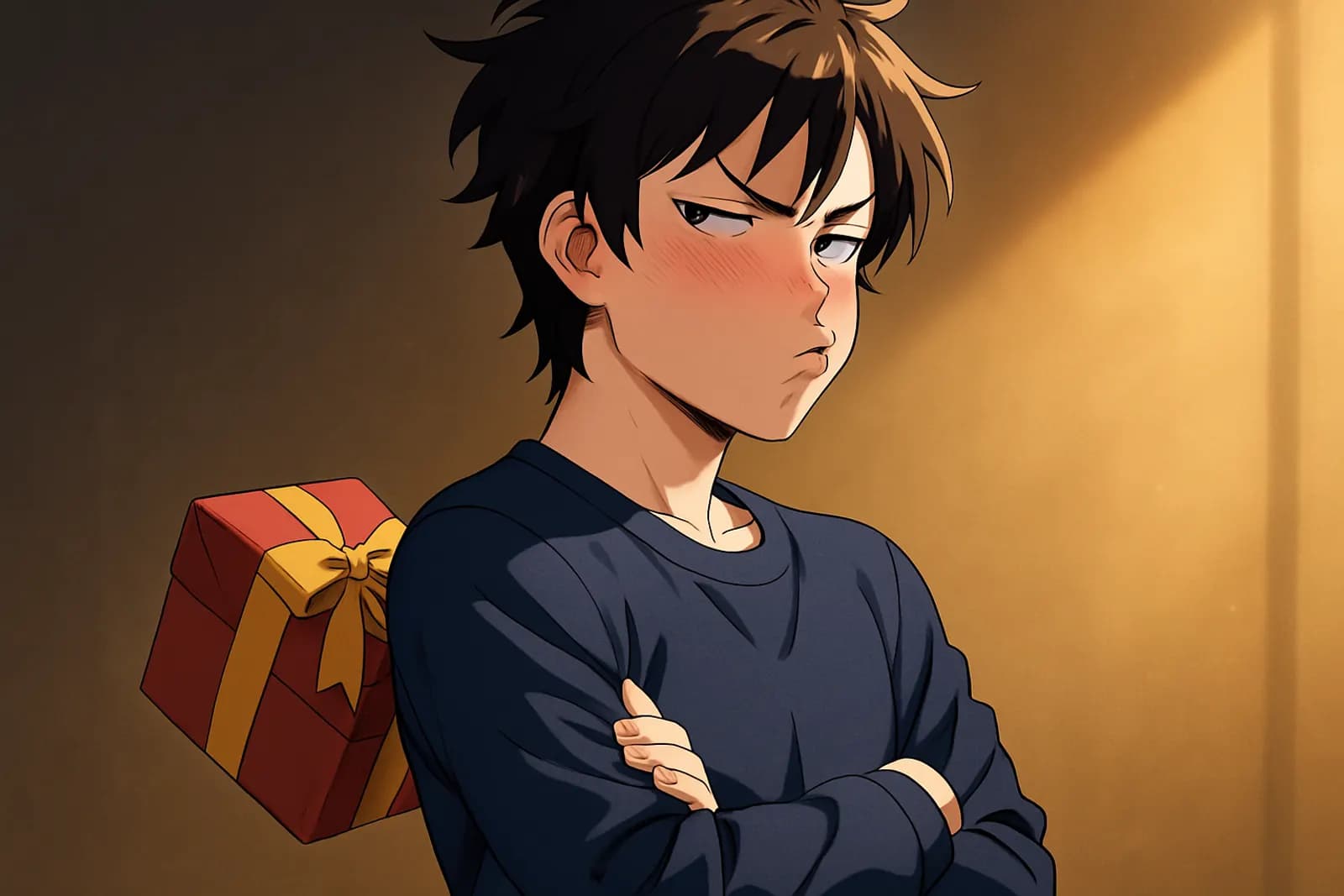
A tsundere (ツンデレ, tsun-deh-reh) is a character who acts cold, irritable or openly hostile toward someone they actually like, and only gradually lets the affection show. The word joins tsun-tsun (prickly, aloof) and dere-dere (lovey-dovey), so a tsundere is literally "prickly, then sweet."
It is one of the "dere" archetypes of manga, anime and visual novels, and easily the best known: if a character shouts "It's not like I like you or anything!" while blushing, you are looking at a tsundere.
Key facts
- Japanese: ツンデレ, from tsun-tsun (ツンツン, curt, standoffish) + dere-dere (デレデレ, affectionate, gushing).
- Origin of the word: Japanese internet fan communities around visual novels in the early 2000s; it had spread into mainstream Japanese vocabulary by the mid-2000s.
- Type: a character archetype, not a genre or demographic. Tsunderes appear in shonen, shojo, seinen, josei and romance alike.
- Classic examples: Taiga Aisaka (Toradora!), Asuka Langley Soryu (Neon Genesis Evangelion), Rin Tohsaka (Fate/stay night), Kurisu Makise (Steins;Gate).
- Sibling archetypes: yandere, kuudere and dandere, all compared in our dere types guide.
What "Tsundere" Literally Means
Japanese is rich in mimetic words, sound-like expressions that describe a state rather than a noise (the same family as the doki doki heartbeat in our manga SFX guide). Two of them make up this word:
- Tsun-tsun describes someone who is curt, sulky and turns their nose up. Picture a head turned sharply away.
- Dere-dere describes someone melting with affection, the slightly embarrassing kind.
Where the Tsundere Came From
The behavior is far older than the word. Romantic comedy has always loved the couple who bicker before they kiss, and manga had plenty of sharp-tongued heroines long before anyone named the pattern. Naru Narusegawa of Love Hina (1998–2001) and Akane Tendo of Ranma ½ are often pointed to as pre-label examples.
The label itself grew out of Japanese online fandom around dating sims and visual novels in the early 2000s, where players needed shorthand for the girl who is mean to you on the first route and adorable by the last. From there it moved into anime marketing, light novels and everyday speech. By the late 2000s, with series like Toradora! (light novel from 2006, anime 2008) and The Familiar of Zero built around tsundere leads, the archetype was both a selling point and a running joke.
The Two Kinds of Tsundere
Fans usually split tsunderes into two broad shapes:
| Type | Default mode | What it looks like | Example | |------|--------------|--------------------|---------| | Tsun-heavy | Hostile most of the time | Insults, yelling, slapstick violence; the soft side is rare and fleeting | Taiga Aisaka (Toradora!) | | Dere-heavy | Mostly kind, flustered under pressure | Generally warm, but snaps defensively when teased about feelings | Kurisu Makise (Steins;Gate) | | Situational | Tsun only toward one person | Polite to everyone except the love interest | Rin Tohsaka (Fate/stay night) |
Some writers also talk about tsunderes who are cold because of pride, versus those who are cold because of insecurity. That second reason tends to age better: the hostility reads as a defense, not just a gag.
Tsundere vs Other Dere Types
| Archetype | Outside | Inside | Core trait | |-----------|---------|--------|------------| | Tsundere | Harsh, irritable | Affectionate | Hides love behind hostility | | Kuudere | Calm, flat, unreadable | Caring | Hides love behind composure | | Dandere | Silent, shy | Warm, chatty once comfortable | Hides love behind shyness | | Yandere | Sweet, devoted | Obsessive, dangerous | Love turns possessive or violent | | Deredere | Openly sweet | Openly sweet | No hiding at all |
The quick test: a tsundere's mask is anger. A kuudere's mask is calm. A dandere's mask is silence. A yandere does not wear a mask over love at all; the love itself is the danger.
Famous Tsundere Characters
These are among the most frequently cited examples, across decades and demographics:
- Taiga Aisaka (Toradora!) - small, ferocious and nicknamed the "Palmtop Tiger." Often treated as the textbook tsundere.
- Asuka Langley Soryu (Neon Genesis Evangelion) - proud, combative pilot whose hostility is tied to deep insecurity; a darker, more serious take.
- Rin Tohsaka (Fate/stay night) - composed and popular in public, sharp and flustered around the protagonist.
- Kurisu Makise (Steins;Gate) - a scientist who argues hard and denies everything, but is mostly kind.
- Louise (The Familiar of Zero) - a loud, whip-cracking example from the genre's mid-2000s peak.
- Naru Narusegawa (Love Hina) - an early, slapstick-heavy prototype of the type.
- Male tsunderes exist too: fans regularly apply the label to prickly rivals who secretly respect the hero, and to romance leads in shojo who tease and then protect.
Why Readers Love Tsunderes
- Built-in payoff. Every harsh line is a promise that a soft one is coming. When the dere finally lands, it feels earned.
- Conflict for free. A couple who argue in every scene generate comedy and tension without any outside plot.
- Readable subtext. Readers enjoy knowing what the character feels before the character admits it.
- Room to grow. The best tsundere arcs are about a person learning to say what they mean.
How to Write a Tsundere That Works
- Give the hostility a cause. Pride, fear of rejection, a past betrayal. One line of backstory changes "mean" into "guarded."
- Show the dere early, in private. Let the reader see one kind act the love interest misses. Now every insult reads as a cover.
- Use a physical tell. A blush, crossed arms, looking away. Manga relies on these; see our romance manga style guide for the visual grammar.
- Write denial dialogue carefully. "I made too much, that's all" works better than another round of shouting. Our manga dialogue guide covers subtext lines.
- Let the ratio shift. Across the story, tsun should shrink and dere should grow. That curve is the character arc.
- Do not make it the whole personality. Give them a hobby, a skill, a goal unrelated to romance.
Drawing a Tsundere With Gootaku
You do not need to draw to put a tsundere on the page. In Gootaku's Manga Maker, each generation draws one panel and costs 1 token. A tsundere reveal usually needs two or three panels, so plan them as separate generations:
- The tsun panel: "teenage girl with twin tails, arms crossed, looking away with an annoyed frown, school hallway, Shōjo style."
- The crack: "same girl, small blush, glancing back over her shoulder, holding a wrapped lunch box."
- The denial: a close-up with your own speech balloon: "D-don't get the wrong idea!"
Every account starts with 1 free token and gets 1 more every 2 days, so you can test the archetype before committing to a whole chapter. Need character inspiration first? Browse our manga OC ideas.
More ways to bring this to life
FAQ
What does tsundere mean in anime?
Tsundere describes a character who is cold, harsh or aggressive toward someone they like, while secretly caring about them. The word combines tsun-tsun (prickly) and dere-dere (lovey-dovey).
Is a tsundere a good or bad character type?
Neither by default. A well-written tsundere has a reason for their defensiveness and grows over the story. A poorly written one is just mean, which is why some readers find the archetype tiresome.
Can boys be tsundere?
Yes. The label is most often applied to heroines, but male characters who hide care behind rudeness or rivalry are commonly called tsundere as well.
What is the difference between tsundere and kuudere?
A tsundere hides affection behind irritation and outbursts. A kuudere hides it behind calm, emotionless composure. One is loud, the other is quiet.
What is the most famous tsundere?
Taiga Aisaka from Toradora! and Asuka Langley Soryu from Neon Genesis Evangelion are the two names that come up most, with Rin Tohsaka and Kurisu Makise close behind.
How do I make a tsundere character for my own manga?
Decide why they are defensive, write one private moment of kindness, then plan the panels where the mask slips. Tools like Gootaku's Character Maker let you lock their design so the same face appears in every panel.
Keep Reading
- Dere Types Explained - every dere archetype side by side
- Kuudere Meaning - the calm, unreadable counterpart
- Anime Character Design Guide - silhouettes, colors and expressions
- How to Plot a Romance Manga - where the tsundere arc fits in a love story
Ready to create your own manga?
Start free — no credit card required. 1 free AI generation on signup, +1 every 2 days.
Start CreatingOn the go? Get the Gootaku iPhone app.
Related guides
Dere Types Explained: Tsundere, Yandere, Kuudere, Dandere
Every dere type in one guide. What tsundere, yandere, kuudere, dandere, deredere, himedere and more …
Kuudere Meaning: The Cool, Calm Character, Explained
Kuudere means a character who seems cold, calm and emotionless but cares deeply underneath. Origin, …
Why Your AI Manga Character Looks Different Every Panel
Your character's hair, eyes, or outfit keeps shifting panel to panel? A troubleshooting guide to the…
Yandere Meaning: The Sweet-but-Dangerous Archetype
Yandere means a character whose love turns obsessive, possessive or violent. Where the word comes fr…
How to Worldbuild for Manga — A Visual Storyteller's Guide
Worldbuilding for manga isn't a 300-page lore doc. It's designing the visual rules of your world so …
How to Write Manga Dialogue That Actually Works
The art of writing manga dialogue — speech bubbles, internal monologue, narrator boxes, and conversa…