Yandere Meaning: The Sweet-but-Dangerous Archetype
Yandere means a character whose love turns obsessive, possessive or violent. Where the word comes from, famous yandere characters, and how to write one well.
Written by Bugra, founder of Gootaku
Contents
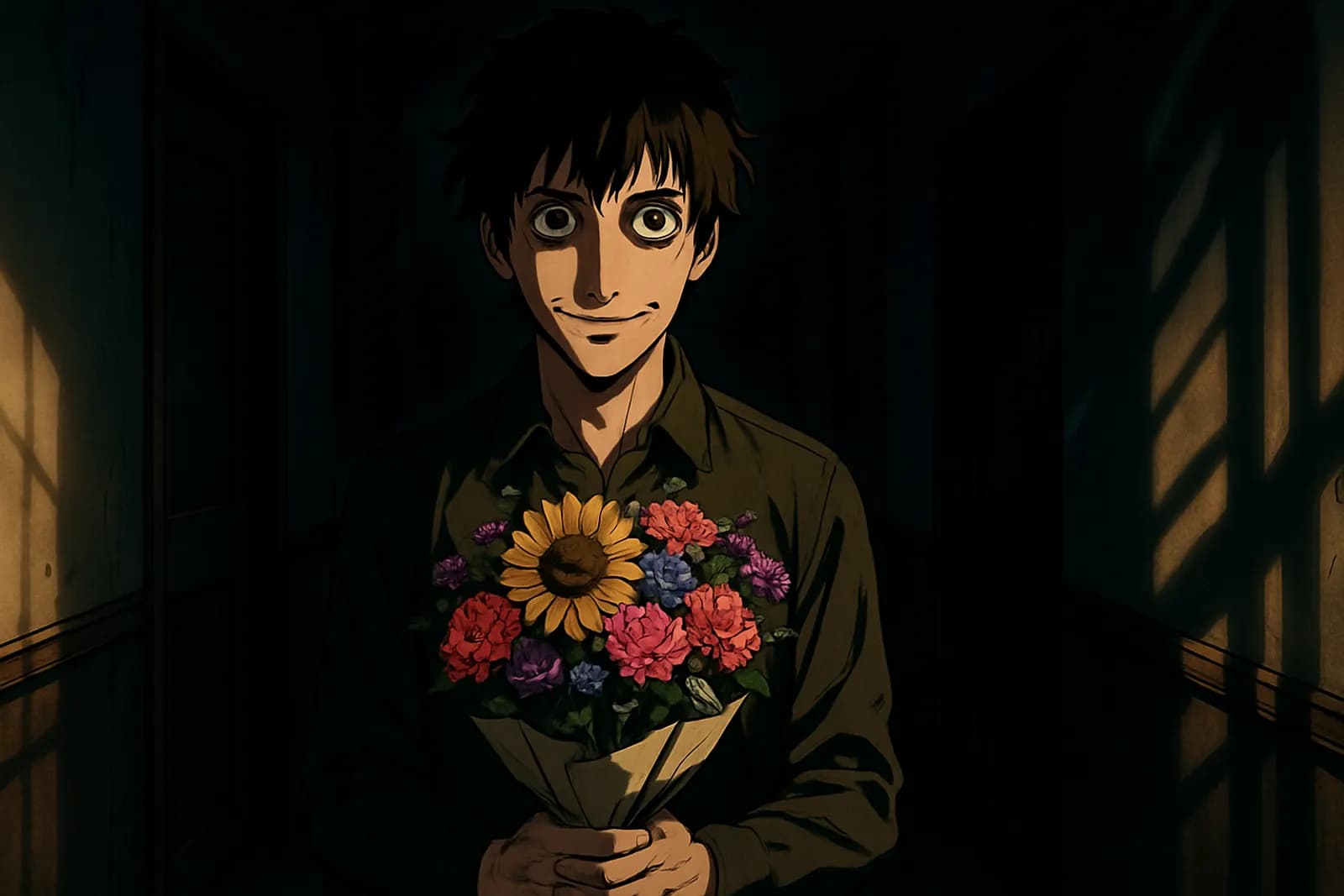
A yandere (ヤンデレ, yahn-deh-reh) is a character who seems sweet and devoted but whose love for one person becomes obsessive, possessive and often violent. The word joins yanderu (病んでる, "to be sick," mentally or emotionally) with dere-dere (lovey-dovey), so a yandere is "lovesick" in the most literal and alarming sense.
Where a tsundere hides love behind hostility, a yandere hides nothing: the love is front and center, and that is exactly the problem.
Key facts
- Japanese: ヤンデレ, from yanderu (病んでる, sick/unwell) + dere-dere (デレデレ, affectionate).
- Origin of the word: Japanese fan communities in the mid-2000s, the same visual novel and anime circles that popularized "tsundere."
- Defining example: Yuno Gasai of Future Diary (Mirai Nikki, manga 2006–2010, anime 2011–2012) is the character most often used to explain the term.
- Genre home: psychological thriller, horror, dark romance and visual novels; also played for dark comedy.
- Content note: yandere stories often involve stalking and violence. They are fiction about unhealthy love, not models of it.
What "Yandere" Literally Means
The first half comes from 病む (yamu, to fall ill), in the casual form yanderu: "is sick." In slang it usually means mentally or emotionally unwell rather than physically ill. The second half is the same dere found in tsundere, kuudere and dandere: melting, gushing affection.
So the word describes a sequence. The character starts dere: cute, attentive, loving. Somewhere along the way the love tips into yan: jealousy, control, threats, and in the most extreme stories, harm to rivals or even to the beloved.
The Two Faces of a Yandere
Most yandere characters run on a visible switch:
| Phase | Behavior | Visual cues in manga | |-------|----------|----------------------| | Sweet | Devoted, helpful, clingy, eager to please | Bright eyes, soft smile, flowers and sparkle backgrounds | | Trigger | A rival appears, or the beloved pulls away | Sudden stillness, shadowed face | | Yan | Jealousy, threats, stalking, violence | "Empty" eyes with no highlights, wide smile, heavy black screentone |
The contrast is the point. A yandere is unsettling because the sweet phase is real; they are not pretending to love, they love too much and in the wrong way.
Yandere vs Other Dere Types
| Archetype | How they show love | Danger level | Classic tell | |-----------|--------------------|--------------|--------------| | Yandere | Openly, then possessively | High | Smile that does not reach the eyes | | Tsundere | Hidden behind hostility | Low (mostly bark) | Blush plus "it's not like I like you" | | Kuudere | Hidden behind calm | None | Tiny, rare smile | | Dandere | Hidden behind shyness | None | Hiding behind a book | | Menhera | Through emotional dependency | Mostly to self | Constant reassurance-seeking |
Menhera (from "mental health") is a related slang term for a character defined by emotional fragility and dependence. It overlaps with yandere but usually lacks the violence. For the full family, see dere types explained.
Famous Yandere Characters
These are the examples fans and critics cite most often:
- Yuno Gasai (Future Diary) - the archetype's poster character: loving, capable, and willing to kill anyone between her and Yukiteru.
- Kotonoha Katsura (School Days) - from the 2005 visual novel and 2007 anime, whose infamous ending made "yandere" a household word in fandom.
- Shion Sonozaki (Higurashi: When They Cry) - a jealousy-driven turn in a series full of paranoia.
- Satou Matsuzaka (Happy Sugar Life, manga 2015–2019) - a modern, deliberately disturbing take that treats the archetype as horror.
- Ayano Aishi (Yandere Simulator) - an independent Western game that spread the word far outside anime fandom.
Yandere Variations
Fans sort yanderes by what the obsession targets and how it plays out:
- Rival-focused. The most common form: the yandere is gentle with the beloved and dangerous only to anyone who comes near them. Yuno Gasai fits here.
- Beloved-focused. The yandere tries to control or confine the person they love, deciding that keeping them close matters more than their freedom. This version reads as the most frightening.
- Self-destructive. The obsession turns inward, with threats of self-harm used to hold the beloved. This overlaps with menhera and is handled with care in better-written stories.
- Comedic. A clingy, jealous character whose "yandere moments" are exaggerated for laughs and never lead to real harm. Many romantic comedies include a light yandere gag character.
- Reformed. A rarer arc in which the character recognizes the obsession and works to let go, which turns a horror archetype into a story about healing.
Why the Yandere Is So Popular
- It inverts a fantasy. "Someone who loves only you" is a romance staple. The yandere asks what that looks like taken to its end.
- Instant tension. Every sweet scene carries dread because the reader knows what the character is capable of.
- Visual hook. The switch from sparkle to empty eyes is one of the most recognizable images in manga.
- Dark comedy potential. Some series exaggerate the type so far it becomes a joke about clingy partners.
Writing a Yandere Responsibly
A yandere is a character study of unhealthy love. Good stories keep that framing clear:
- Make the harm visible as harm. The story can sympathize with the character's loneliness without endorsing stalking or violence.
- Give a root cause. Isolation, abandonment, a lack of anyone else who ever cared. Yuno is memorable because her backstory explains her fixation.
- Plan the reveal. The best yandere stories show the sweet side long enough that the first crack lands hard.
- Use restraint on the page. Implication, a shadow, a smile held too long, is scarier than gore. Our horror manga style guide covers dread through composition.
- Treat the beloved as a person. If the target of the obsession has no inner life, the story becomes flat. Their fear and confusion are half the drama.
Drawing a Yandere Reveal With Gootaku
The yandere switch is a perfect two-panel beat. In Gootaku's Manga Maker, each generation draws one panel for 1 token, so plan each face separately:
- Sweet panel: "girl with long pink hair holding a heart-shaped bento, bright sparkling eyes, gentle smile, cherry blossoms, Shōjo style."
- Reveal panel: "same girl, face half in shadow, wide smile, eyes without highlights, dark hallway, heavy black shading, Seinen style."
You start with 1 free token and get 1 more every 2 days, enough to try the reveal before building a full chapter.
More ways to bring this to life
FAQ
What does yandere mean?
Yandere describes a character whose love for someone becomes obsessive, possessive or violent. It combines yanderu (sick, unwell) and dere-dere (lovey-dovey).
Who is the most famous yandere?
Yuno Gasai from Future Diary is the most widely cited example, followed by Kotonoha Katsura from School Days and Shion Sonozaki from Higurashi.
What is the difference between yandere and tsundere?
A tsundere hides affection behind harshness but is not dangerous. A yandere shows affection openly, and that affection becomes controlling or violent.
Can a yandere be a good character?
As a character, yes: yanderes can be compelling, tragic and memorable. As a model for real relationships, no. The best stories present the obsession as the problem.
Are there male yanderes?
Yes. Male yanderes appear in dark romance, otome games and thrillers, though female examples are more widely known.
What are yandere eyes?
A manga convention where the character's eyes lose their highlights, becoming flat or "empty," usually paired with a smile. It signals the switch into the obsessive side.
Keep Reading
- Dere Types Explained - tsundere, yandere, kuudere, dandere and more
- Tsundere Meaning - the prickly-then-sweet archetype
- How to Write Manga Villains - motive, menace and payoff
- Horror Manga Style Guide - dread, shadow and the slow reveal
- Anime Character Design Guide - expressions that tell the story
Ready to create your own manga?
Start free — no credit card required. 1 free AI generation on signup, +1 every 2 days.
Start CreatingOn the go? Get the Gootaku iPhone app.
Related guides
Dere Types Explained: Tsundere, Yandere, Kuudere, Dandere
Every dere type in one guide. What tsundere, yandere, kuudere, dandere, deredere, himedere and more …
Tsundere Meaning: What a Tsundere Is, With Examples
Tsundere means a character who is cold or hostile on the outside but secretly affectionate. Origin o…
AI Anime Avatar Maker — Create Profile Pictures and OCs
Create anime avatars with AI for profiles, original characters, manga stories, GIF reactions, and Go…
AI Anime Character Maker Online — Design Original Characters
Create original anime characters online with AI. Learn character prompts, consistency rules, outfit …
Manga Panel Aspect Ratios Explained (What Gootaku Generates)
A practical guide to manga panel aspect ratios — standard sizes, when to use each one, and how to pr…
Manga Panel Composition Rules — Layout & Flow
The grammar of manga panels — how layout, size, angle, and reading flow control pacing and emotion. …